A few days ago, I spent an hour in the local Barnes & Noble. There’s only one other bookstore in town, indie, focused on banned books and so on. Nothing wrong with that, but their inventory isn’t as large as B&N, and I was looking for mass market paperback crime novels. Yeah, I do read those at night, so large, heavy novels don’t make the cut, as they’re hard to hold steady while one reads in bed.
The displays at the store entrance always catch my eye. That’s their purpose, of course. I saw two novels devoted to cooks. Frida’s Cook and The Artist and the Feast, both in hardcover and both beyond my current budget.
On my way home, I kept thinking about those novels. Would I like them? What did the critics say? A deep dive into Amazon and Goodreads told me that the author of Frida’s Kitchen was from Argentina, so the book was a translation into English from Spanish. Kirkus Reviews opined, “A colorful if melodramatic tribute to a fascinating figure.” The Artist and the Feast has no Kirkus review, but The Guardian chimed in on the novel, saying, A seductive combination of romance, puzzle and poetry, The Artist also offers a considered interrogation of the value of art: to open windows in human existence, to push against limits, to bring freedom, perspective and light.” [1]
I thought of Like Water for Chocolate and a few other, more literary novels I’d read featuring cooks, and often, chefs. Most novels do not mention cooks at all, so I am always on the lookout for cooks (and chefs) in fiction.
Thus, I decided to list a baker’s dozen of fictional stories about cooks. Some I have read, others not, at least not yet. [2]
Cooks and Chefs in Fiction, a Very Short List
Cooking for Picasso, by Camille Aubray
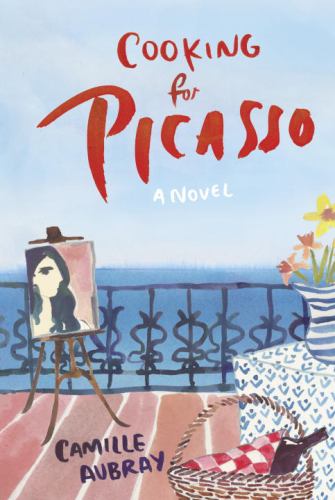
“In writing about my heroine Ondine, I wondered, how would she survive her intense encounter with Picasso? I knew the impact would be life–changing, so I decided to follow her—-and Picasso—-through the years, revealing other crucial moments that helped Ondine to mature into a courageous adult whose ambitions intersected with Picasso at times that were also greatly significant in his life. And, in following Ondine’s lifetime, it was natural for me to think about how her adventures with Picasso might also affect her daughter, Julie, and even her American grand–daughter, Céline. This finally led me to the hilltop village of Mougins, where Picasso lived with his second (and last) wife, Jacqueline, in a house they called Notre Dame de Vie. Here the great artist died in 1973. Mougins has for decades been a center of gastronomie, so it was a perfect locale for my novel.” ~ Camille Aubray
*Like Water for Chocolate, by Laura Esquivel
This classic love story takes place on the De la Garza ranch, as the tyrannical owner, Mama Elena, chops onions at the kitchen table in her final days of pregnancy. While still in her mother’s womb, her daughter to be weeps so violently she causes an early labor, and little Tita slips out amid the spices and fixings for noodle soup. This early encounter with food soon becomes a way of life, and Tita grows up to be a master chef, using cooking to express herself and sharing recipes with readers along the way.
Frida’s Cook, by Florencia Etcheves
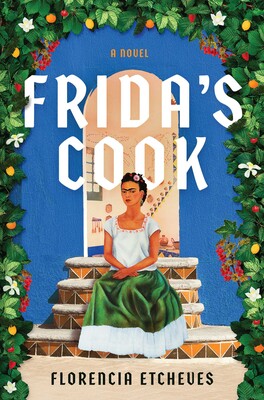
Mexico City, 1939: Young and determined Nayeli Cruz flees from her Oaxaca home to arrive in Mexico City with neither friends nor prospects. Alone and armed only with her sharp wit and extraordinary talent in the kitchen, she finds herself in front of La Caza Azul, the home of Frida Kahlo. As she begins work as the artist’s cook, Nayeli is pulled into Frida’s world of pain, passion, and defiance. But it isn’t long before amid the vibrant tapestry of flavors, scents, and colors, the two women form a deep bond—one that will shape the course of Nayeli’s life and leave behind a secret buried in art.
Buenos Aires, Present Day: Paloma, Nayeli’s granddaughter, stumbles upon a mysterious painting depicting her grandmother as a young woman. The artist’s identity is unknown, but the artwork’s existence threatens to unravel long-held family secrets. As Paloma delves into her grandmother’s past, she uncovers a tale of passion, betrayal, and resilience that challenges everything she thought she knew about the one woman who raised her.
*The Cookbook Collector, by Allegra Goodman
Emily and Jessamine Bach are opposites in every way: Twenty-eight-year-old Emily is the CEO of Veritech, twenty-three-year-old Jess is an environmental activist and graduate student in philosophy. Pragmatic Emily is making a fortune in Silicon Valley, romantic Jess works in an antiquarian bookstore. Emily is rational and driven, while Jess is dreamy and whimsical. Emily’s boyfriend, Jonathan, is fantastically successful. Jess’s boyfriends, not so much.
*The Cook, by Maylis de Kerangal
More like a poetic biographical essay on a fictional person than a novel, The Cook is a coming-of-age journey centered on Mauro, a young self-taught cook. The story is told by an unnamed female narrator, Mauro’s friend and disciple who we also suspect might be in love with him. Set not only in Paris but in Berlin, Thailand, Burma, and other far-flung places over the course of fifteen years, the book is hyperrealistic—to the point of feeling, at times, like a documentary. It transcends this simplistic form, however, through the lyricism and intensely vivid evocative nature of Maylis de Kerangal’s prose, which conjures moods, sensations, and flavors, as well as the exhausting rigor and sometimes violent abuses of kitchen work.
In The Cook, we follow Mauro as he finds his path in life: baking cakes as a child; cooking for his friends as a teenager; a series of studies, jobs, and travels; a failed love affair; a successful business; a virtual nervous breakdown; and—at the end—a rediscovery of his hunger for cooking, his appetite for life.
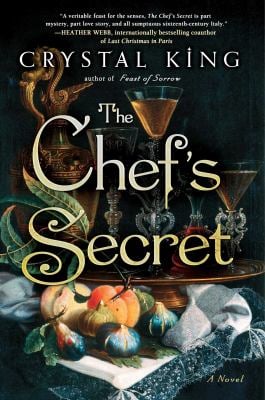
The Chef’s Secret, by Crystal King
The Chef’s Secret, the second historical novel by Crystal King, is set in Renaissance Rome, detailing the mysterious life of one of the most famous chefs in history.
The Chef’s Secret tells the story of Bartolomeo Scappi, the private chef to four Popes and the author of one of history’s best selling cookbooks. His nephew and apprentice, Giovanni, is on a quest to find out the truth about his uncle and the fifty-year love affair that the chef hid from the world.
The Chef’s Secret is a fictional retelling of the life of Bartolomeo Scappi, who lived in sixteenth-century Rome. When his cookbook, L’Opera, was published in 1570, it became the world’s best-selling cookbook for the next two hundred years.
*The Last Chinese Chef, by Nicole Mones
When Maggie McElroy, a widowed American food writer, learns of a Chinese paternity claim against her late husband’s estate, she has to go immediately to Beijing. She asks her magazine for time off, but her editor counters with an assignment: to profile the rising culinary star Sam Liang. In China Maggie unties the knots of her husband’s past, finding out more than she expected about him and about herself.
With Sam as her guide, she is also drawn deep into a world of food rooted in centuries of history and philosophy. To her surprise she begins to be transformed by the cuisine, by Sam’s family — a querulous but loving pack of cooks and diners — and most of all by Sam himself. The Last Chinese Chef is the exhilarating story of a woman regaining her soul in the most unexpected of places.
*The Hundred Foot Journey, by Richard Morais
Born above his grandfather’s modest restaurant in Mumbai, Hassan Haji first experienced life through intoxicating whiffs of spicy fish curry, trips to the local markets, and gourmet outings with his mother. But when tragedy pushes the family out of India, they console themselves by eating their way around the world, eventually settling in Lumière, a small village in the French Alps.
The boisterous Haji family takes Lumière by storm. They open an inexpensive Indian restaurant opposite an esteemed French relais—that of the famous chef Madame Mallory—and infuse the sleepy town with the spices of India, transforming the lives of its eccentric villagers and infuriating their celebrated neighbor. Only after Madame Mallory wages culinary war with the immigrant family, does she finally agree to mentor young Hassan, leading him to Paris, the launch of his own restaurant, and a slew of new adventures.
*The Cheffe, by Marie NDiaye
Born above his grandfather’s modest restaurant in Mumbai, Hassan Haji first experienced life through intoxicating whiffs of spicy fish curry, trips to the local markets, and gourmet outings with his mother. But when tragedy pushes the family out of India, they console themselves by eating their way around the world, eventually settling in Lumière, a small village in the French Alps.
The boisterous Haji family takes Lumière by storm. They open an inexpensive Indian restaurant opposite an esteemed French relais—that of the famous chef Madame Mallory—and infuse the sleepy town with the spices of India, transforming the lives of its eccentric villagers and infuriating their celebrated neighbor. Only after Madame Mallory wages culinary war with the immigrant family, does she finally agree to mentor young Hassan, leading him to Paris, the launch of his own restaurant, and a slew of new adventures.
*La Cucina, by Lily Prior
When Rosa was a teenager, her own cooking became the stuff of legend in this small community that takes pride in the bounty of its landscape and the eccentricity of its inhabitants. Rosa’s infatuation with culinary arts was rivaled only by her passion for a young man, Bartolomeo, who unfortunately belonged to another. After their love affair ended in tragedy, Rosa retreated first into her kitchen and then into solitude, as a librarian in Palermo. There she stayed for decades, growing corpulent on her succulent dishes, resigned to a loveless life.
Then, one day, she meets the mysterious chef, known only is L’Inglese, whose research on the heritage of Sicilian cuisine leads him to Rosa’s library, and into her heart. They share one sublime summer of discovery, during which L’lnglese awakens the power of Rosa’s sensuality, and together they reach new heights of culinary passion. When L’lnglese suddenly vanishes, Rosa returns home to the farm to grieve for the loss of her second love. In the comfort of familiar surroundings, among her, growing family, she discovers the truth about her loved ones and finds her life transformed once more by the magic of her cherished Cucina.
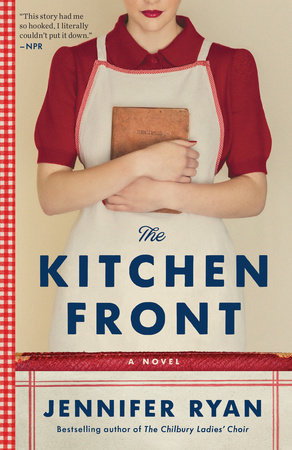
*The Kitchen Front, by Jennifer Ryan
Two years into World War II, Britain is feeling her losses: The Nazis have won battles, the Blitz has destroyed cities, and U-boats have cut off the supply of food. In an effort to help housewives with food rationing, a BBC radio program called The Kitchen Front is holding a cooking contest—and the grand prize is a job as the program’s first-ever female co-host. For four very different women, winning the competition would present a crucial chance to change their lives.
For a young widow, it’s a chance to pay off her husband’s debts and keep a roof over her children’s heads. For a kitchen maid, it’s a chance to leave servitude and find freedom. For a lady of the manor, it’s a chance to escape her wealthy husband’s increasingly hostile behavior. And for a trained chef, it’s a chance to challenge the men at the top of her profession.
The Artist and the Feast, by Lucy Steeds
During a scorching summer in 1920s Provence, a young journalist, Joseph Adelaide, turns up at the farmhouse of reclusive artist Edouard Tartuffe, hoping to write an article about him. There, he meets Ettie, Tartuffe’s niece, who appears to do everything for her uncle—from cooking and cleaning to catering to his maniacal moods. Joseph is beguiled by where he finds himself, not just by this foreign place or Tartuffe himself, but by Ettie, who watches everything so quietly from the periphery. Both Joseph and Ettie carry scars from their pasts and it’s as they get to know each other that they start to lay bare those scars to themselves and to each other.
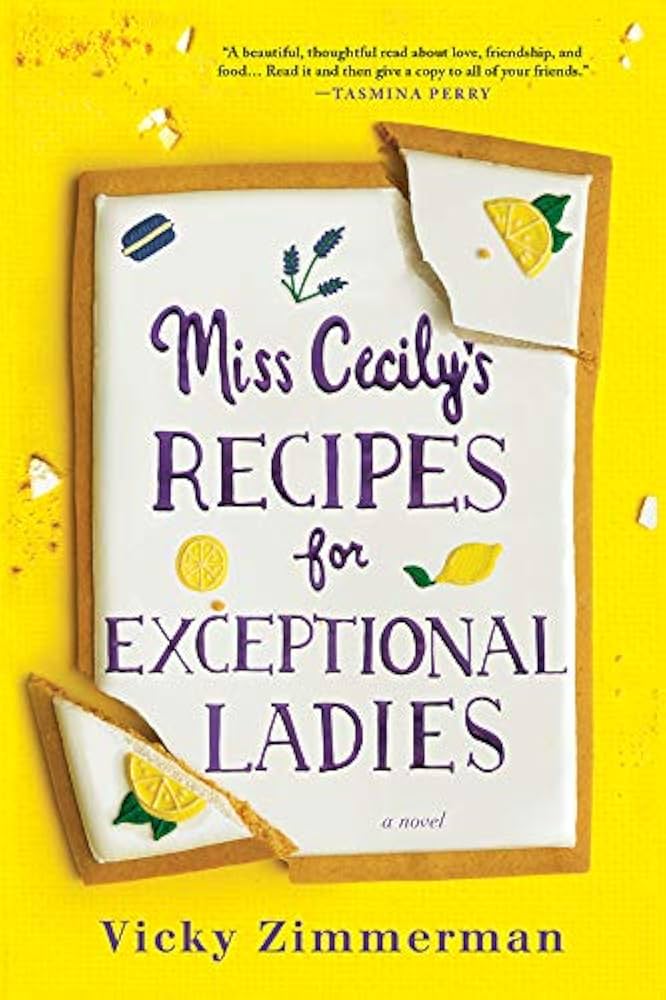
Miss Cecily’s Recipes for Exceptional Ladies, by Vicky Zimmerman
When her life falls apart on the eve of her 40th birthday, Kate Parker finds herself volunteering at the Lauderdale House for Exceptional Ladies. There she meets 97-year-old Cecily Finn. Cecily’s tongue is as sharp as her mind, but she’s fed up with pretty much everything.
Having no patience for Kate’s choices in life or love, Cecily prescribes her a self-help book…of sorts. Thought for Food: an unintentionally funny 1950s cookbook high on enthusiasm, featuring menus for anything life can throw at the “easily dismayed,” such as:
• Breakfast with a Hangover
• Tea for a Crotchety Aunt
• Dinner for a Charming Stranger
As she and Cecily break out of their ruts, Kate will learn far more than recipes.
_______________
[1] British title for The Artist and the Feast is simply The Artist.
[2] With publishers’ blurbs. Please share any suggestions you may have for elongating the list. Books I’ve read are marked an *.


You must be logged in to post a comment.