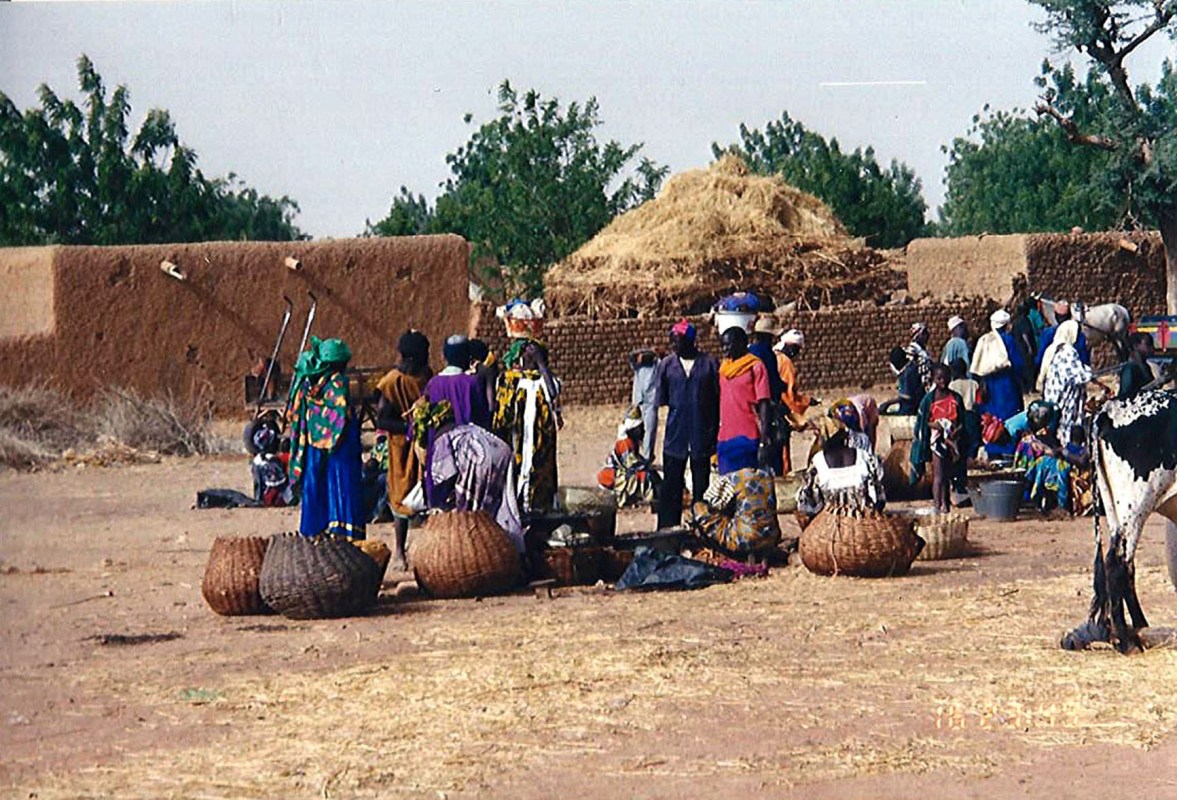
Maze-like unpaved streets and red-mud brick buildings lend the aura of a rural village to the West African metropolis. Women garb themselves in vibrant and symbolic yellow and red and blue and green batik-cloth robes. Smoke and pollution from thousands of charcoal cooking fires and thousands of overloaded and under-maintained mopeds daily saturate the scorching 96º F air. Lined on either side with towering modern street lamps, each topped with a foul-smelling vulture waiting for something to die, a lone paved two-lane boulevard pushes outward to the edge of the city, where it suddenly just stops. The endless bush is all that is left, the hazy emptiness extending on until the horizon and the sky become one.
This is a place where it seems like God took a vacation during the planning stage and forgot to come back to finish things. This is a place where a healthy person could be wholly alive one day, but the next day dead and buried in a shallow sandy hole, the only memorial a thin coating of heavy rocks on top of the grave, to keep scavenging dogs from eating the remains. And that scourge of scourges, AIDS, takes the hale and the hearty, farmers, too — many of them women — who plant crops by poking holes in dry earth and dropping in priceless seeds.
Death strikes hard and fast here, in this place. Only the strong and the well-connected survive.
But this is also a place where street markets blossom everywhere that the dusty flattened earth will support them. Market women set out their small mounds of red tomatoes and tiny parched carrots, determined to eke out a living in spite of ominous odds.
The following list represents food items available in a modern Burkina Faso open market in Ouagadougou. Primarily found during the post-rainy season falling (after Christmas), most of the foods appear regularly in markets throughout West Africa.*
MEATS
Beef
Chicken
Goat
Guinea Fowl
Mutton/Lamb
Organ Meats
FISH AND SEAFOOD
Dried Fish (dried catfish or dried carp)
Smoked Fish (smoked minnows)
Dried Shrimp
VEGETABLES
Cabbage
Cassava (and cassava flour or gari)
Eggplant
Green Onion Leaves
Green Plantains
Greens (wild and otherwise)
Okra
Sweet Potatoes
Tomatoes
Yams
GRAINS
Corn
Fonio
Millet
Rice
Sorghum
Wheat
LEGUMES AND OTHERS
Cowpeas (Black-Eyed Peas)
Lentils
FRUITS
Bananas (green and ripe)
Baobab (flour, used in beverages)
Coconuts
Melons
Pineapple
SEEDS AND NUTS
Melegueta Pepper
Palm Nuts
Peanuts/Groundnuts Sesame
Sheanut
INSECTS
Shea caterpillars
HERBS AND SPICES
Cilantro
Cinnamon (for puddings and cakes)
Cloves
Egusi Seeds (melon seeds, ground up)
Garlic
Ginger
Kako (specially cured fish)
Krona Pepper (like paprika)
Locust Beans (fermented)
Mint Leaves
Onion
Palm Oil
Parsley
Peanut Oil
Red Pepper (cayenne)
Red Sorrel Flowers
Tamarind
MEAT IN PEANUT SAUCE WITH SPINACH
Serves 4-6
You can use beef, goat, or lamb if you prefer. And if you really like mutton, that, too.
3 T. peanut oil
2 pounds chuck beef roast, trimmed of excess fat, rinsed, cut into 2-inch chunks, and patted dry
1 1/2 large yellow onions, finely chopped
3 cloves garlic, peeled, sliced, and lightly crushed with the side of a cleaver or large knife
1 piece of fresh ginger the size of a large walnut, peeled and lightly crushed with the side of a cleaver or large knife
1 small hot green pepper, seeded, and minced, or more to taste
8 large plum tomatoes, coarsely chopped
1 t. salt or to taste
½ t. freshly ground black pepper or to taste
¼ t. cayenne pepper or to taste
1 t. paprika
1 t. curry powder
1 t. dried thyme leaves
1 cup natural peanut butter
16 oz. fresh spinach leaves
Fresh cilantro leaves, chopped, for garnish
Heat oil in a large, heavy-bottomed pot over medium-high heat. Place salted meat chunks in pot and cook until well; flip pieces over and brown the other sides. Remove meat from pan and set aside on a large plate. Add onions to the pan and fry until slightly translucent and golden in color; toss in the garlic, ginger, and hot green pepper. Cook for another minute or so, until garlic turns slightly golden. Stir in tomatoes and cook for about 3 minutes. Mash tomatoes with a potato masher or other implement. Mix in the salt, black pepper, cayenne pepper, paprika, curry powder, and thyme leaves. Stir well. Pour in 2 cups of water. Add the meat, making sure to cover pieces with the liquid. Reduce the heat to low and simmer uncovered for 10-15 minutes.
Using some of the broth from the pot, thin the peanut butter and stir well. Add ½ of the peanut butter mixture to the stew. (Reserve the other half of the mixture for the spinach.) Cook, covered, until meat is tender, about an hour and a half or so. Add more water if stew looks too thick.
While the meat cooks, rinse the spinach, and immediately add it to a large skillet over high heat. Stirring constantly, cook the spinach until all the leaves wilt. Remove from heat instantly and dump the spinach into a colander. Run cold water over the spinach and let drain. When cool enough to handle, squeeze out excess water from the spinach and set aside. Just before the meat is done, place the spinach in a heavy-bottomed pot, gently stir in the reserved peanut sauce, and warm the mixture over medium-low heat, uncovered, making sure that the mixture stays moist. Add a few tablespoons of water if mixture gets too dry.
Ladle sauce over white rice, placing pieces of meat on the side. Garnish the meat and the rice with chopped cilantro leaves. Spoon the spinach near the meat. Pass Fiery West African Tomato Condiment around the table and dribble some on the meat if desired.
FIERY WEST-AFRICAN TOMATO CONDIMENT
Makes 2 ½-3 cups
3 T. peanut oil
5 large garlic cloves, peeled and finely minced
3 habanero peppers, seeded, and finely chopped (leave seeds in for an even hotter taste)
8 large plum tomatoes, cut into quarters
Salt and freshly ground black pepper to taste
Heat oil over medium-high heat in heavy-bottomed skillet. Add garlic and sauté for about 30 seconds, or until garlic turns slightly golden in color. Add peppers and fry for another 30 seconds, stirring constantly. Slip tomatoes carefully into the oil to avoid splattering, sprinkle with salt and pepper. Cook for 2 minutes and then lower the heat. Simmer uncovered until oil separates from the tomatoes. Store in a covered container for up to a week. Use as a condiment with any African main dish.
____________________
*In West Africa, the shrinking Sahel — due to increasing desertification — promises serious changes in the already-tenuous food situation there.
© 2009 C. Bertelsen
 CYNTHIA D. BERTELSEN