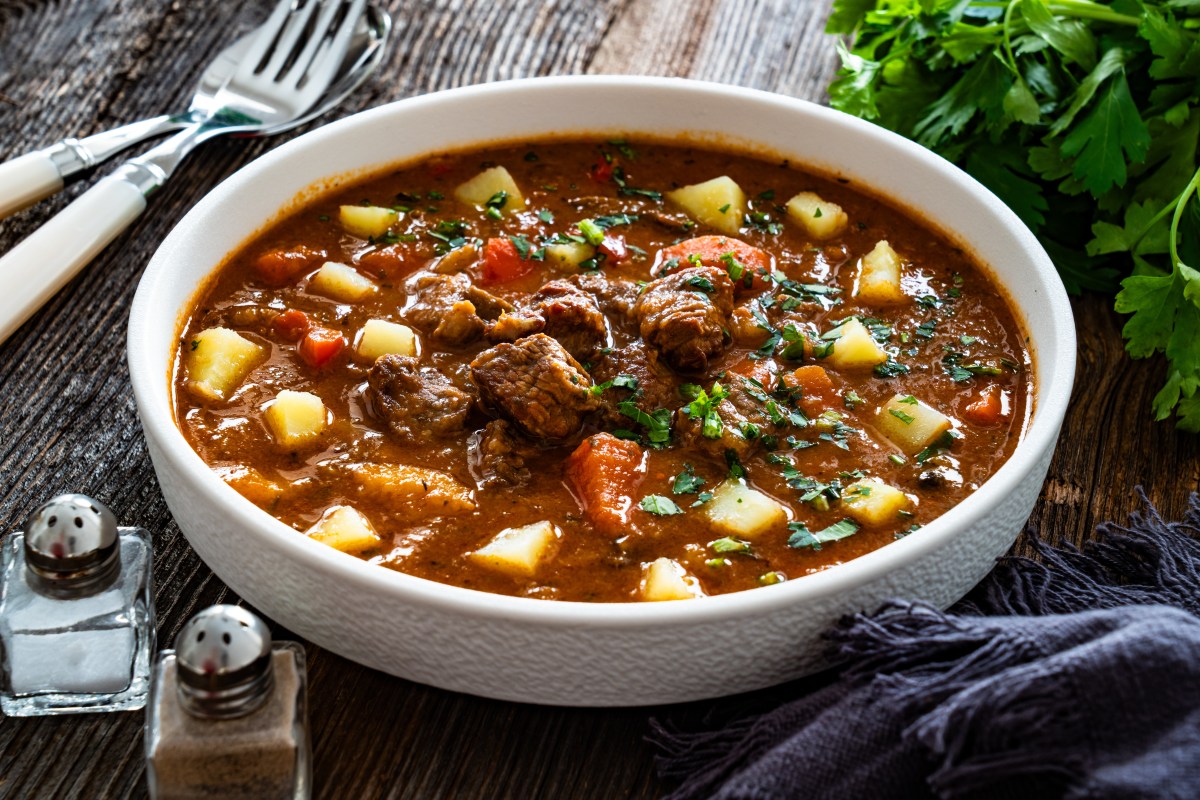

Soup is a dish common in nearly all culinary cultures, but, as I’ve said many times, in my childhood home in Pullman, Campbell’s took pride of place. The options seemed endless:
Tomato Soup.
Chicken Noodle Soup.
Chicken with Rice Soup.
Bean with Bacon Soup.
Manhattan Clam Chowder.
New England-Style Clam Chowder.
Vegetable Beef Soup.
I seemed satisfied with this fare, until one day when I came home from first or second grade, I cannot remember which. Suffice it to say that saliva flooded my mouth as I tore off my red rubber boots and tracked dirty snow all over the kitchen floor. Daddy stood at the stove, the aroma of fried beef hung in the air, and something bubbled in the big aluminum pot in front of him.
“What’s that, Daddy?” I asked.
“Vegetable beef soup,” he said, as he dumped a cup of frozen corn into the pot.
Compared to Daddy’s vegetable beef soup, Campbell’s version could only be called an abomination. The major reason for this discrepancy―a rose in this case could not be called a rose, nor could the soup from a can hold a candle to the real thing―turned out to be eugenol, a compound found in cloves. The secret ingredient in Daddy’s soup, a large pinch of ground cloves, turned out to be a trick practiced by savvy cooks since the Middle Ages. He learned that tidbit of culinary genius from a family friend, Bill O’Neill.
All I knew at the time was this: When I realized that I’d be eating that soup for dinner, I almost walked on air up to my second-floor bedroom. Somehow the snow outside and the icy lace pattern on the inside of the bedroom window disappeared. Snuggled under four heavy blankets, and Grandma’s tied quilt, I thought I’d discovered Paradise.
Or close to it.
And when I took my first bite of the soup, if I’d known the word at the time, “ambrosial” described it well.
Canned soups, though, meant Paradise to other people. John T. Dorrance, a chemist working for Campbell’s, came up with the idea for condensed soups in 1897. Condensing soup meant it could be sold in smaller cans, for a lower price. A boon for many.
I still preferred Daddy’s soup. As writer M.F.K. Fisher once put it, “The smells were supernacular.”
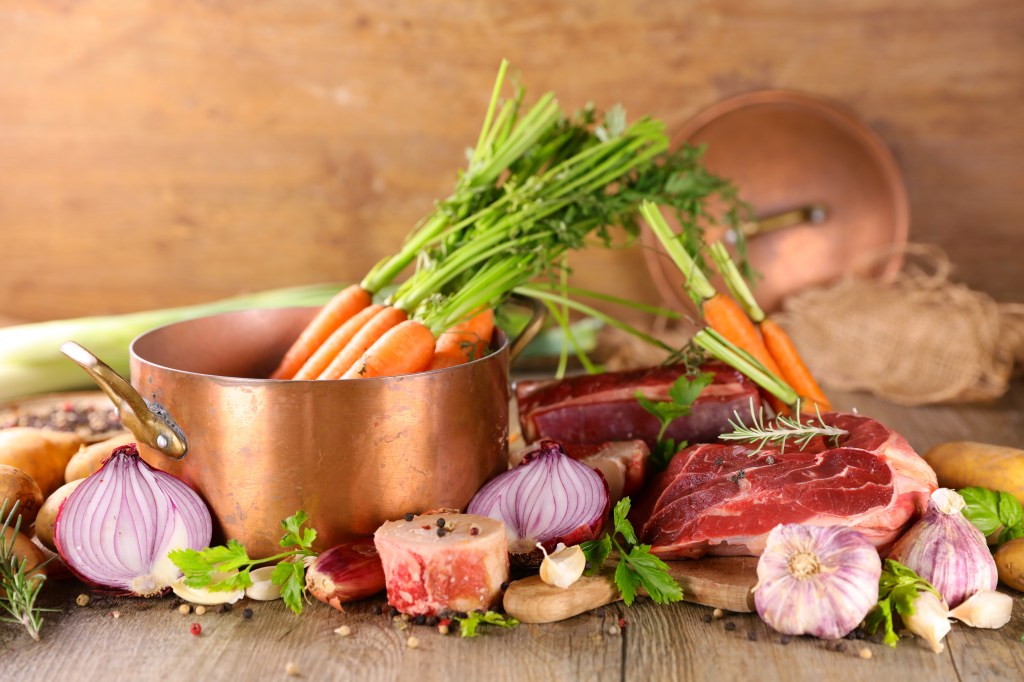
Daddy’s Vegetable Beef Soup
Serves 6 hearty eaters
¼ cup extra virgin olive oil
2 pounds beef chuck roast, cut into 1½-inch squares
½ medium yellow onion, finely chopped
½ bell pepper, green or red, finely chopped
3 garlic cloves, peeled, finely minced
2 (15-ounce) cans tomato sauce, unsalted
4 cups (1 quart) beef stock, unsalted
2 tablespoons Worcestershire sauce
1 cup rutabaga, peeled, cut into ½-inch dice
3 medium Russet potatoes, peeled, and cut into 1-inch chunks
1 package frozen mixed vegetables or fresh equivalents (green beans, corn, lima beans, carrots)
¼ cup flat leaf parsley, minced
1 tablespoon Louisiana-style hot sauce
1 teaspoon dried thyme leaves or 4–5 sprigs fresh
¼–½ teaspoon ground cloves, or to taste
½ cup pearl barley
1 teaspoon granulated sugar
Freshly ground black pepper, to taste
Fine sea salt, to taste
Brown meat in the oil in large Dutch oven over medium high heat. Add onion and green/red pepper. Sauté until onion is translucent, then add garlic, cook another 30 seconds. Toss in all remaining ingredients, simmer on low heat until meat is fork tender. Soup is better the next day. Serve with bread, salad, and fruit.
Daddy has been gone for almost eleven years. But when I make this soup, it’s as if he’s standing next to me, his hand on my shoulder. Or so it seems.
*This recipe appears in my award-winning culinary memoir, Stoves & Suitcases: Searching for Home in the World’s Kitchens.
 CYNTHIA D. BERTELSEN
You must be logged in to post a comment.