Shakespeare is the happy hunting ground of all minds that have lost their balance.
JAMES JOYCE, ULYSSES
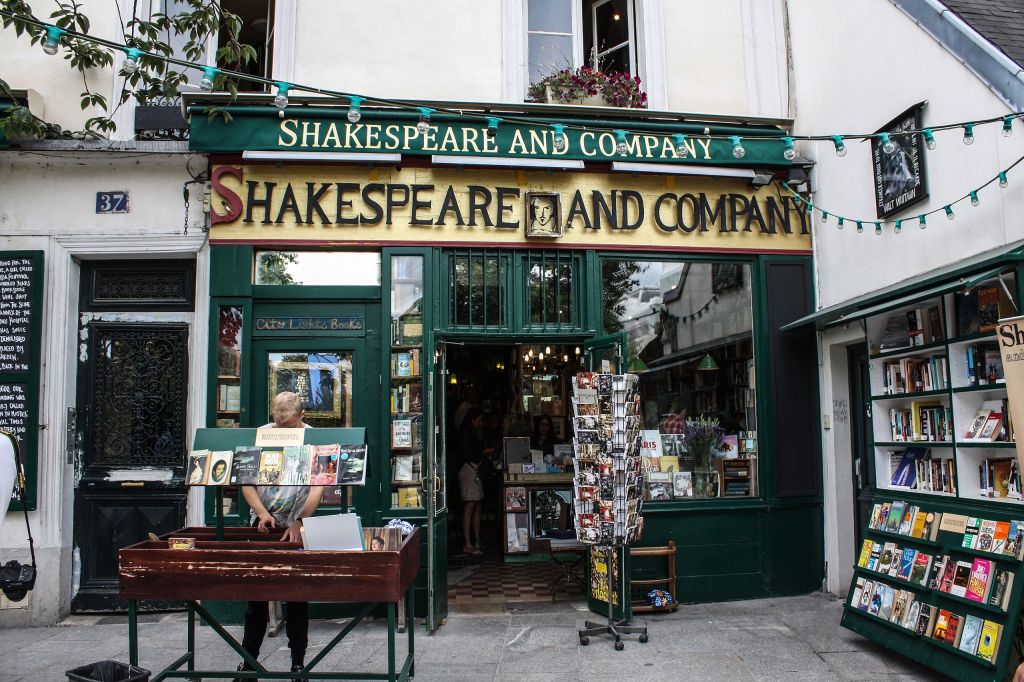
Just about every book-loving tourist visiting Paris knows about Shakespeare & Company, a funky and unusual bookshop. Located at 37, Rue de la Bûcherie, overlooking the Seine, with a magnificent view of Notre Dame to boot, it’s usually jam-packed with tourists longing to soak up a crumb or two from the legendary intelligentsia who supposedly frequented the store in the 1920s and 1930s.
What many of these seekers don’t know is that the original owner of Shakespeare & Company, Sylvia Beach, opened the store at 12, rue de l’Odéon, in 1919. It also served as a lending library, just a few blocks north of the Luxembourg Gardens.
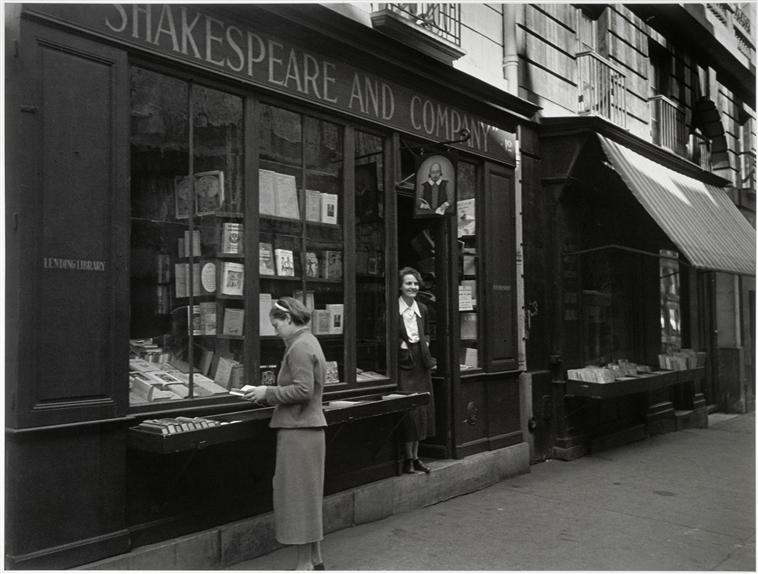
Sylvia Beach published the first version of James Joyce’s controversial novel Ulysses when traditional publishers shied away from it. The New York Society for the Suppression of Vice worked toward having the book banned in 1920. Not until 1933 was the ban lifted by court order. In the meantime, Sylvia smuggled the book into the United States, many times covering the offending text with a book jacket titled The Complete Works of William Shakespeare!
Then the Germans occupied Paris on June 14, 1940.
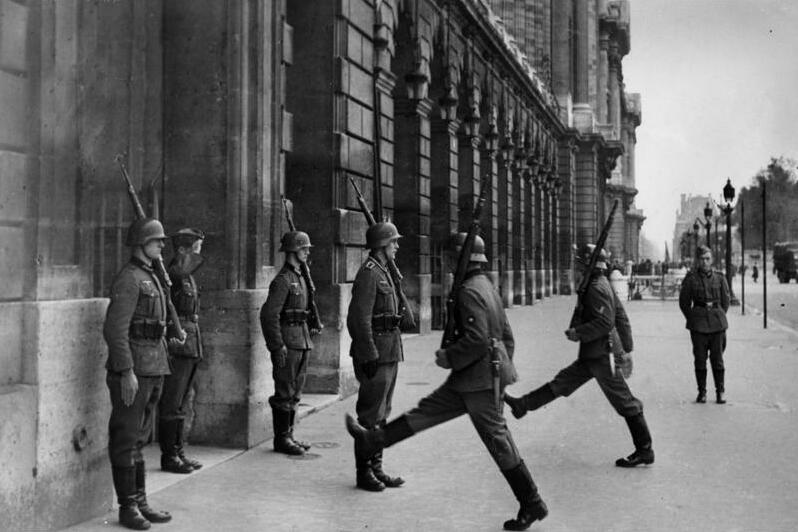
Releve de la garde au Crillon.
Credit Line (ACME), Paris Oct. 7/40, Chas. Baulard. (Wikipedia)
As the current website for the shop states, “One day that December, a Nazi officer entered her store and demanded Beach’s last copy of Finnegans Wake. Beach declined to sell him the book. The officer said he would return in the afternoon to confiscate all of Beach’s goods and to close her bookstore. After he left, Beach immediately moved all the shop’s books and belongings to an upstairs apartment.”
The story of Sylvia’s bookshop ended in 1941 after her six-month internment in Vittel by the Nazis in occupied Paris. She just didn’t have the heart to reopen the shop after the war ended. Her memoir, Shakespeare & Company, appeared in 1959. Sylvia passed away in 1962 in Paris.
But George Whitman, a brilliant world traveler and “tumbleweed,” as he dubbed himself, decided to reopen the bookshop at its present location in 1951, fittingly on what was once a monastery. Originally, he named his shop The Mistral, after the fierce winds of Provence. But later he renamed it Shakespeare & Company to honor Sylvia Beach. He even named his daughter Sylvia after Miss Beach. George passed away at age 98 on December 14, 2011. Sylvia Whitman nows runs the shop.
“I created this bookstore like a man would write a novel, building each room like a chapter, and I like people to open the door the way they open a book, a book that leads into a magic world in their imaginations.”
~ George Whitman
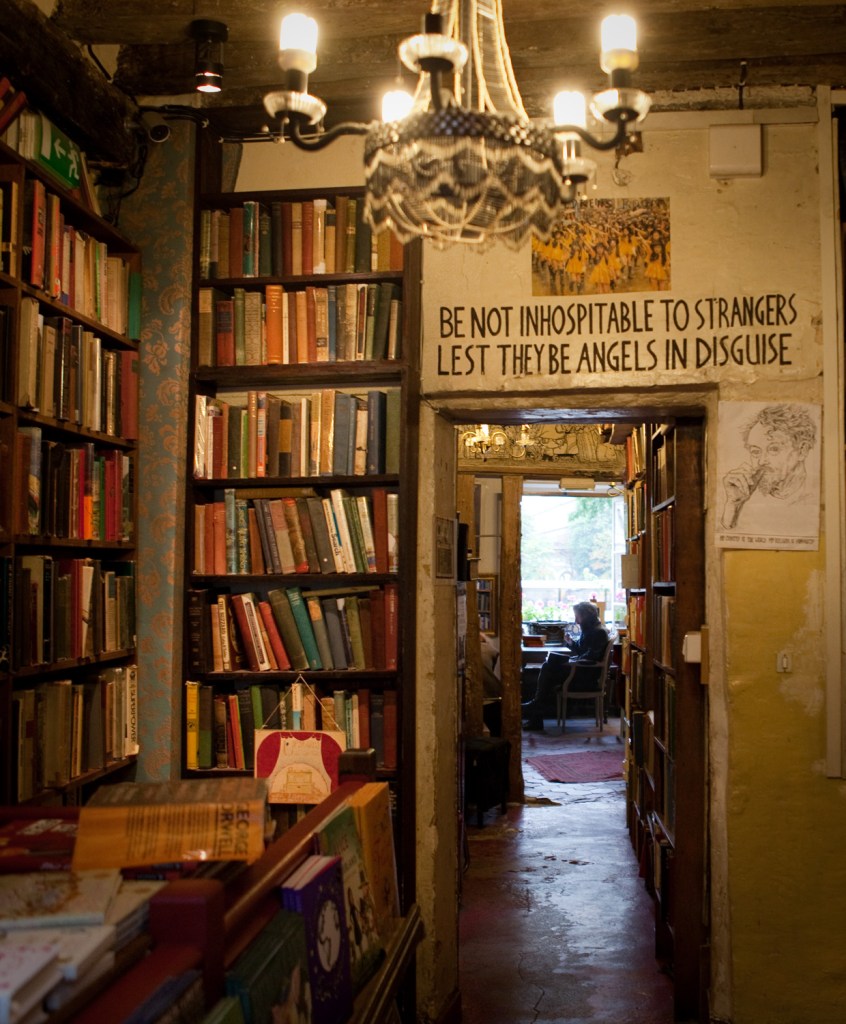
George Whitman’s dream called to me, too, as well as to thousands of others.
In 2010, I wound up in France, to accompany my mother to a series of archaeological meetings in Foix in the south of France. We spent a few days in Paris before taking the train to Tours, where we picked up a rental car to get to Foix. One afternoon, I dashed into Shakespeare & Company, as I always did whenever I was lucky enough to be in Paris. This particular visit, on a warm September afternoon, found me in dire need of les toilettes more than books, however. I tramped up a few flights of stairs and found myself face to face with George Whitman, the legendary owner of Shakespeare & Company. George stood stirring a pot of soup over a battered gas stove. Before I could get the words out of my mouth, he pointed to a door. Ah ha, les toilettes! True hospitality! Sadly, George passed away the next year, as I have mentioned.
Tourists inundate the shop, so much so that when I was there last in March 2023, I couldn’t even get through the front door. Long lines wound around the block and filled the small courtyard in front.
I just hope some of the lucky few that day soaked up bits of the spirit of the place. Some will surely be famous someday, as so many other visitors to the shop often become.
Whether that happens or not, the mere fact that the bookstore still exists – despite book burnings and bannings and totalitarianism and war – gives me hope. I hope it’s the same for you as well.
For more about these remarkable people and their bookshop, take a look at Sylvia Beach and the Lost Generation: A History of Literary Paris in the Twenties & Thirties (Noel Riley Fitch); The Letters of Sylvia Beach (ed. by Keri Walsh); Time was Soft There (Jeremy Mercer); and The Paris Bookseller (a novel by Kerri Maher).

 CYNTHIA D. BERTELSEN
You must be logged in to post a comment.