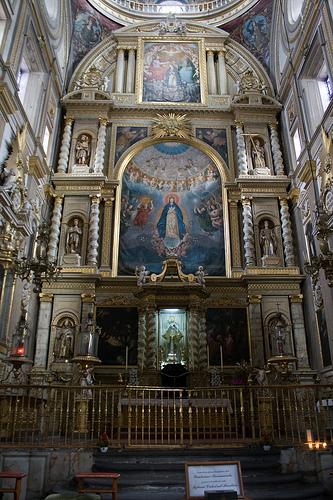
(Continued from December 23, 2008 …)
What a feast lay there on the other side of the heavy wooden door, spread out before us on a long refectory table that used to be in one of Puebla’s convents! Tia had covered her table with an antique white-lace tablecloth. Shrimp cocktails, cold meat platters, seafood, pork tamales, tasty bits like tuna-stuffed pickled jalapeños, jicama like the street vendors sold, gleaming crystal glasses, colorful chins plates, and blazing candles covered every inch of the table.
Tio Jorge’s Christmas salad sat at the very end of the table. In spite of the fact that he couldn’t boil water, somehow he managed to make the salad every year, because tradition decreed that the father of the family always made it, for some reason. La cena de la Navidad is one of the biggest events of the year.
More guests and family arrived later and the children ran around excitedly lighting the pre-dinner fireworks, mostly sparklers (luces de Belén), before sitting down for dinner. Bottles of rompope, a rum-infused homemade version of eggnog, stood at both ends of the long table, along with bottles of the ubiquitous tequila and tiny wedges of lime. Ponche navideño, too, Christmas Punch.
And the children could scarcely sit still because of their excitement about bashing the star-shaped piñata slung from the ceiling with a frayed rope. When hit just the right way, the big clay pot covered with papier-mâché cracks and breaks, raining down candies, sweets, and trinkets on the heads of everyone, even the adults.
Tia brought out another piñata and several of the men, now quite tequila tipsy, strung it up from a ceiling cross beam at the end of the long narrow room. Even the children drank rompope and soon sat giggling under the long table. The scene turned sepia, like old photographs of my grandparents from the 1890s and the first days of the early 1900s.
There’s a lot to be said for tradition.
Rompope
Serves 8-12
Colonial-era nuns at the Convent of Santa Clara in Puebla first made this drink, and the Santa Clara brand is still one of the most popular. Rompope is very easy to make at home. Unlike north-of-the-border eggnog, rompope already contains alcohol, although in a small proportion, so it does not require the addition of rum or brandy, as is the custom in the U.S.
2 quarts milk
½ teaspoon baking soda
2 cinnamon sticks
2 cups sugar
2 teaspoons pure vanilla extract
12 egg yolks, beaten
2 cups dark rum
In a large saucepan, bring the milk to a boil with the baking soda and cinnamon. Remove from heat and allow to cool. Boil again, remove from heat, and cool again. Stir in sugar, vanilla and beaten egg yolks. Return mixture to the heat and simmer over a medium flame, stirring constantly, until the bottom of the pan can be seen when stirring. Remove from heat and allow to cool. Stir in rum.
Christmas Fruit Punch
Makes 5 gallons, serves 16 or more
Find the biggest pot you can get your hands on, like the one grandma used to seal her canning jars in. Leave the skins on all of the fruit, which add flavor and texture. Serve the punch with chunks of fruit. Eating the fruit once you’ve enjoyed the liquid is part of the experience.
6 quarts water
1 lb. peeled sugar cane, cut into 3 inch lengths then split lengthwise into string-cheese sized sticks
1 lb. cored, and very coarsely sliced apple
1 lb. quartered guavas
1 lb. tejocotes or dried apricots
1 lb. tamarindo
½ lb. prunes or raisins
4 cinnamon sticks, broken into large pieces
1 lb. piloncillo or light brown sugar
1 cup dried hibiscus flowers (sold in Mexican markets)
1 lb. apples, chopped coarsely
1 lb. pears, chopped coarsely
2 oranges, each studded with 10 whole cloves
1 bottle dry white wine
Sugar to taste
Light or dark rum to taste
Simmer 1 hour until all of the fruit is very soft. Serve hot, ladling bits of fruit into each mug. Add rum at the last minute.
For more about Christmas Eve celebrations, see The Christmas Eve Cookbook: With Tales of Nochebuena and Chanukah, by Ferdie Pacheco and Luisita Sevilla Pacheco.
© 2008 C. Bertelsen
 CYNTHIA D. BERTELSEN