Proverbs are the palm oil with which words are eaten.
~ Chinua Achebe
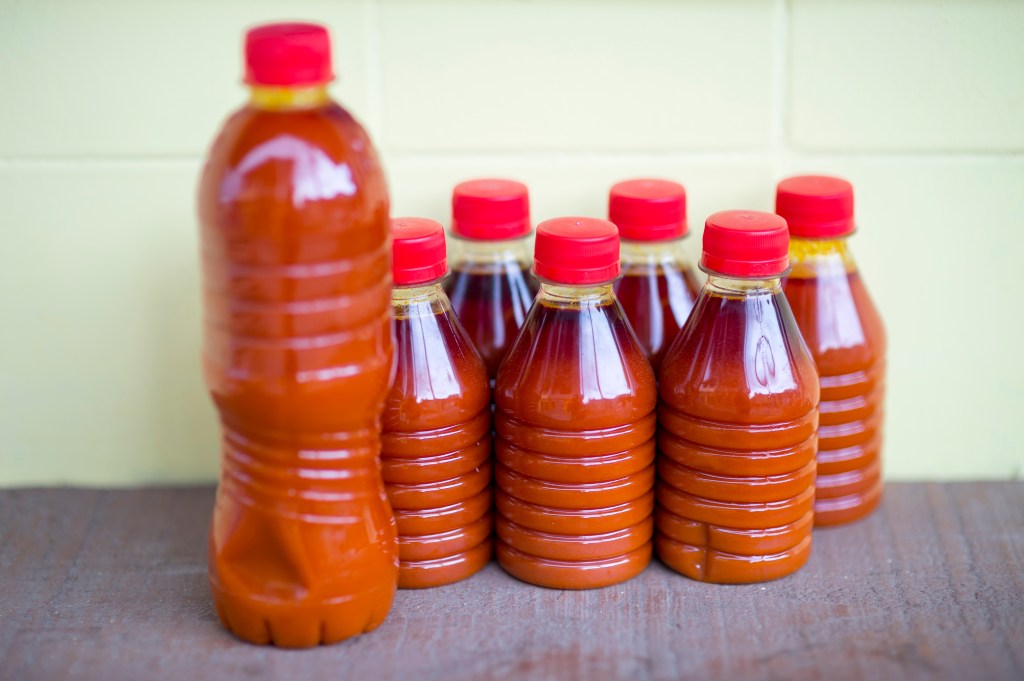
I first spied dendê, a thick, almost ragged-looking orangey-red oil, in the central market in Ouagdougou. There, it’s funneled into whatever plastic containers vendors or their neighbors can find once they’ve processed the oil. Lined up on make-shift shelves or arranged artfully on crisp canvas or cloth on the ochre-colored ground, these colorful bottles often match the fabric of the women shoppers’ robes. Its texture resembles partially melted shortening more than oil, to be honest. Now you can buy it at Trader Joe’s and just about any U.S. grocery store featuring an international aisle―formerly known as “ethnic.”
Red palm oil as a cooking ingredient has existed for thousands of years. Much in the same way that people use olive oil in the Middle East and elsewhere. Not surprisingly, Harlem food entrepreneur Yemisi Awosan dubs red palm oil the “olive oil of Africa.” And it plays an important role in medicine and religious rituals in Africa as well.
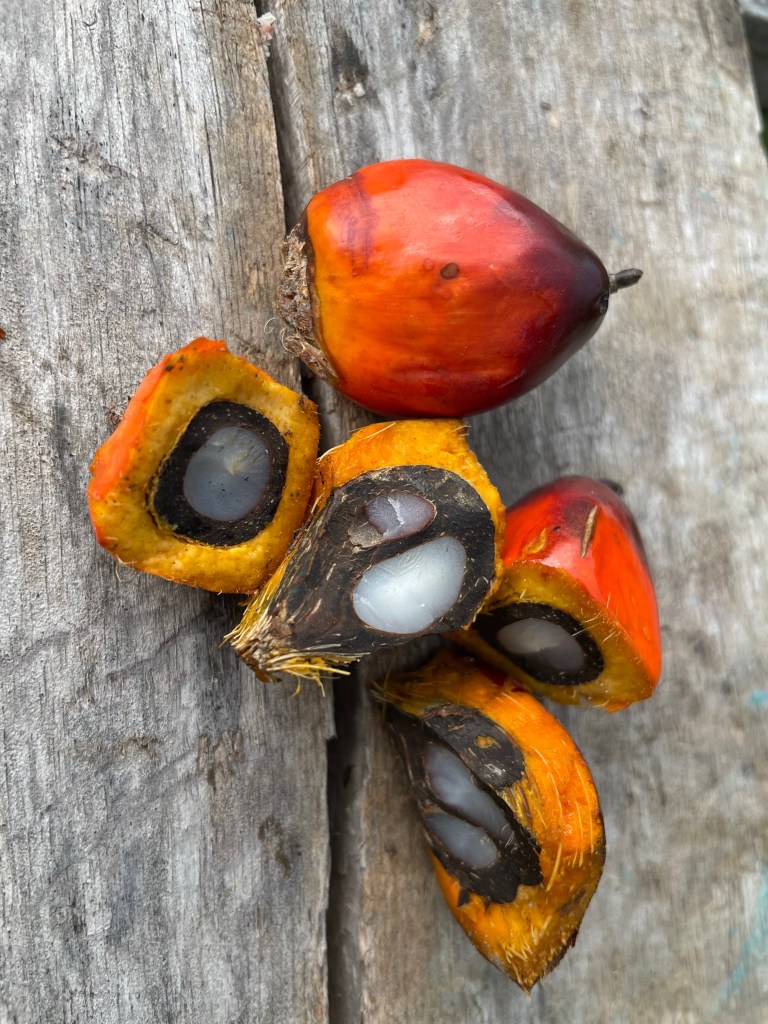
African red palm oil―made from the very fibrous mesocarp of the fruit of Elaeis guineensis and used in traditional West African, Brazilian, as well as some southeast Asian cooking―adds a rich red color, unctuous mouthfeel, and distinctive flavor to many traditional stews and sauces. Rich in beta-carotenes that can be converted in the body to vitamin A, this palm oil contains no trans fats since it’s not hydrogenated. But saturated fats make up most of the content of red palm oil.
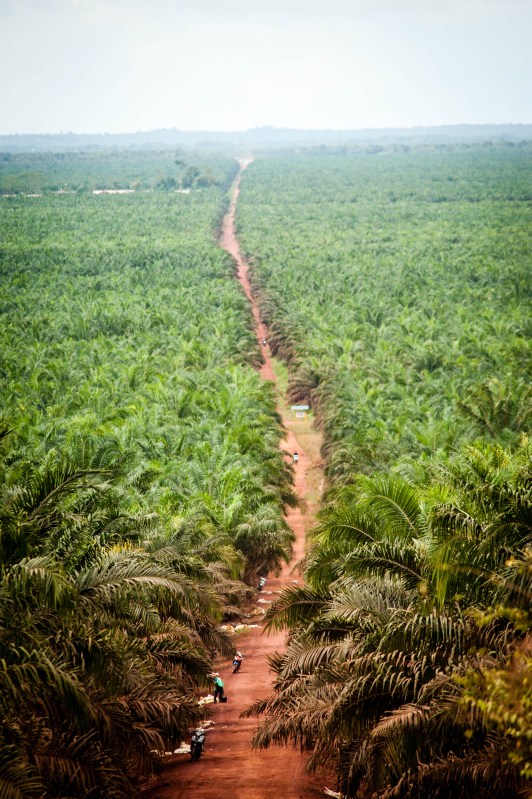
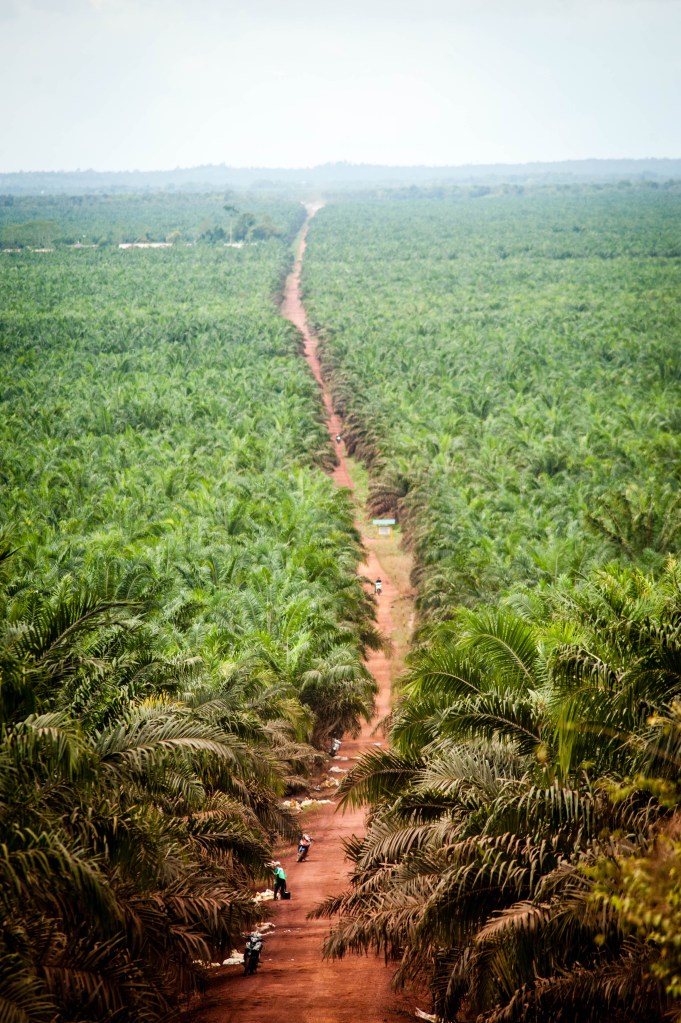
Unfortunately, palm oil also packs a huge and detrimental wallop to the environment, especially because of the increasing demand for palm-kernel-oil-based biofuels and as a major ingredient in cosmetics. In other words, large multinational corporations discovered this traditional food and its uses far beyond the cook pot. Tropical rainforests now face serious degradation and animal extinctions, as slash-and-burn practices testify to the greed for the profits generated by the industrial demand for palm oil. Indonesia and Malaysia produce most of the world’s palm oil. This became quite clear to me when I once flew from Tokyo to Manado, Indonesia. Before landing in Singapore, the plane skimmed over mile after mile of oil palm forests, going on or so it seemed forever.
Sir Richard Francis Burton, one of the most prolific―and culturally biased―chroniclers of nineteenth-century Africa, expounded on red palm oil in Chapter XIII of his The Lake Regions of Central Africa. Note the disparaging comments about the taste of food that he found strange:
The Elaeis Guiniensis, locally called mchikichi, which is known by the Arabs to grow in the Islands of Zanzibar and Pemba and more rarely in the mountains of Usagara, springs apparently uncultivated in large dark groves on the shores of the Tanganyika, where it hugs the margin, rarely growing at any distance inland. The bright-yellow drupe, with shiny purple-black point, though nauseous to the taste, is eaten by the people. The Mawezi, or palm-oil, of the consistency of honey, rudely extracted, forms an article of considerable traffic in the regions about the lake. This is the celebrated extract whose various official uses in Europe have already begun to work a social transformation in W. Africa. The people of Ujiji separate by pounding the oily sarcocarpium from the one seed of the drupe, boil it for some hours, allow the floating substance to coagulate, and collect it in large earthen pots. The price is usually about one doti of white cotton for thirty-five pounds, and the people generally demand salt in exchange for it from caravans. This is the “oil of a red color” which, according to Mr. Cooley, is brought by the Wanyamwezi “from the opposite of southwestern side of the lake.” Despite its sickly flavor, it is universally used in cooking, and forms the only unguent and lamp-oil in the country.
I see wisdom in this oil.
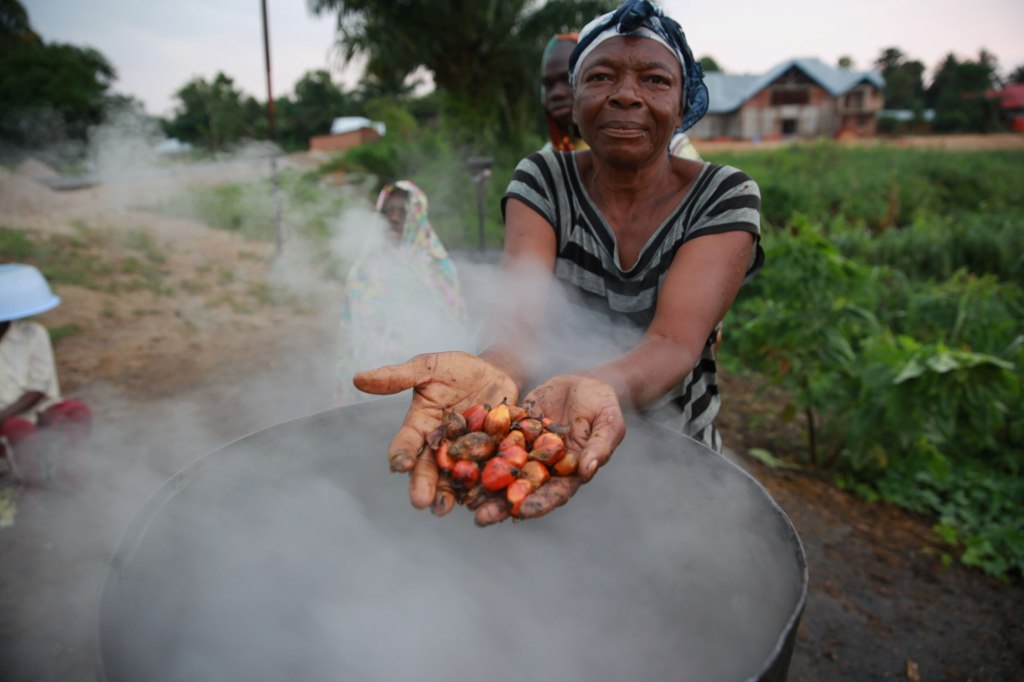
I see wisdom in the making of it, the downright brilliant ingenuity it took to look at the palms, the seeds, the impetus to squeeze the most out of those seeds, those red mesocarps the color of sunsets and blood.
I see wisdom streaming from the cooks and agriculturalists who fed their families and others every day.
I see wisdom and tradition in the cooking of Africa.
Wisdom soaked in palm oil,
Africa’s cooking fires blazing … .
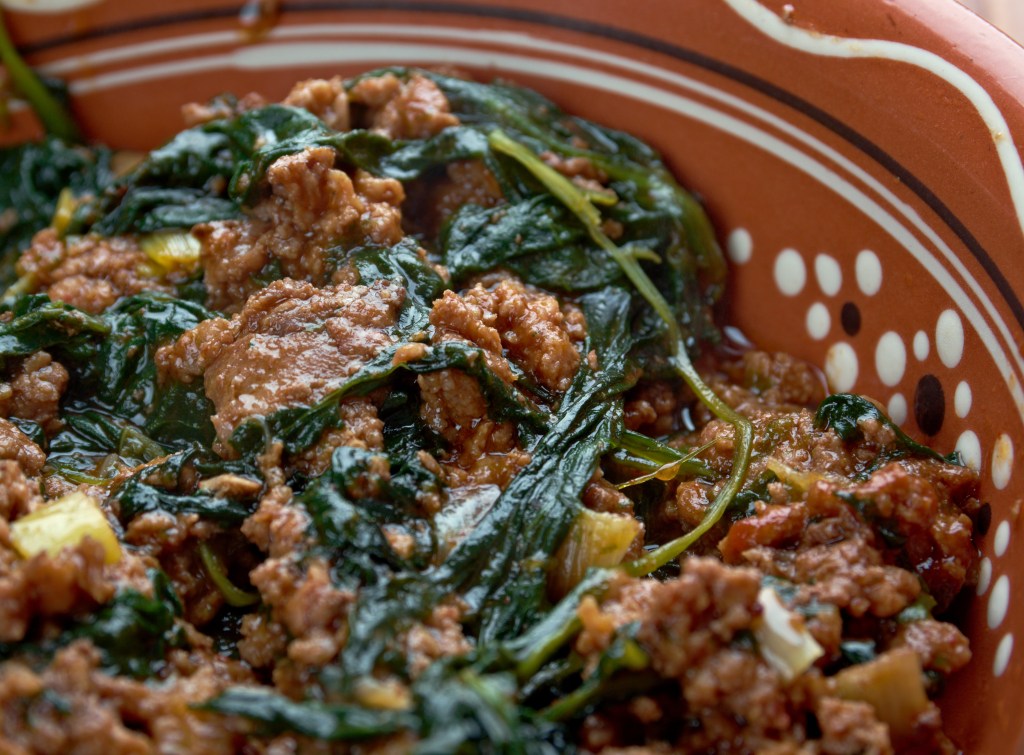
Palava Sauce
1 cup palm oil
3 medium yellow onions, chopped
3 large tomatoes, peeled and chopped fine
Salt and freshly ground black pepper to taste
¼–½ teaspoon cayenne
½ pound diced cooked meat or fish, preferably smoked
3 bunches of spinach (washing and chopped) or 1½ pounds frozen chopped spinach
3½ ounces egusi (ground shelled pumpkin seeds or pepitas)
Heat oil in a deep pot until shimmering. Add onions and fry until golden brown. Stir in tomatoes, salt, black pepper, and cayenne. Add meat or fish and simmer on low heat for 5 minutes. Stir in spinach and cover pot, Simmer for another 10–15 minutes, stirring occasionally; try not to break up the fish too much if using. Add the egusi and stir into the sauce. Cook on low heat for 10–15 minutes more. Serve hot with boiled rice, yams, plantains.
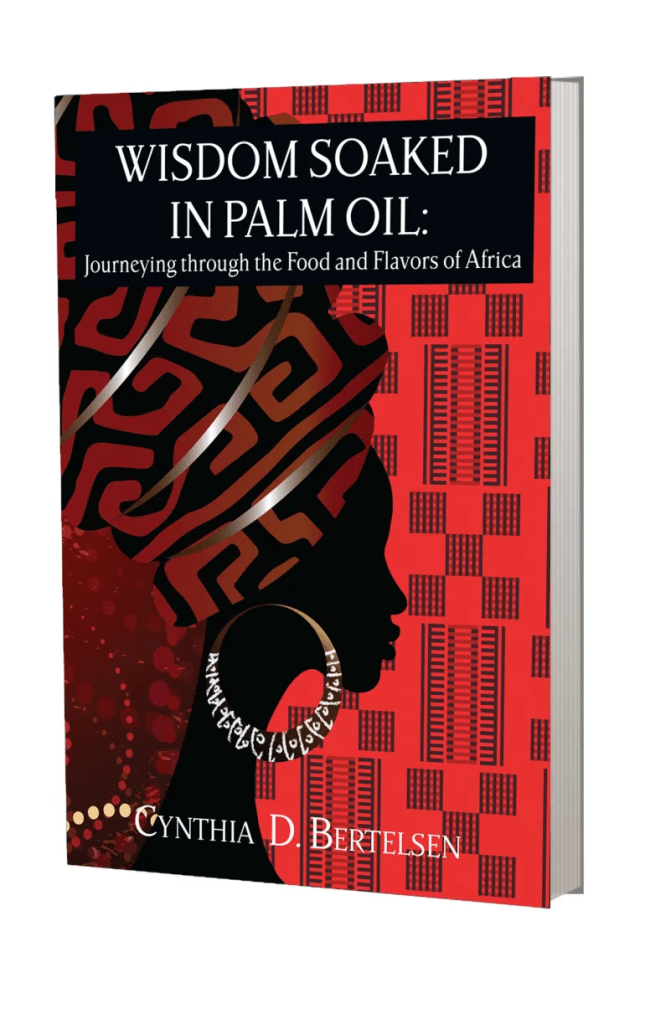
For more of my writing about Africa, please check out Wisdom Soaked in Palm Oil: Journeying Through the Food and Flavors of Africa. Available on Amazon.
 CYNTHIA D. BERTELSEN