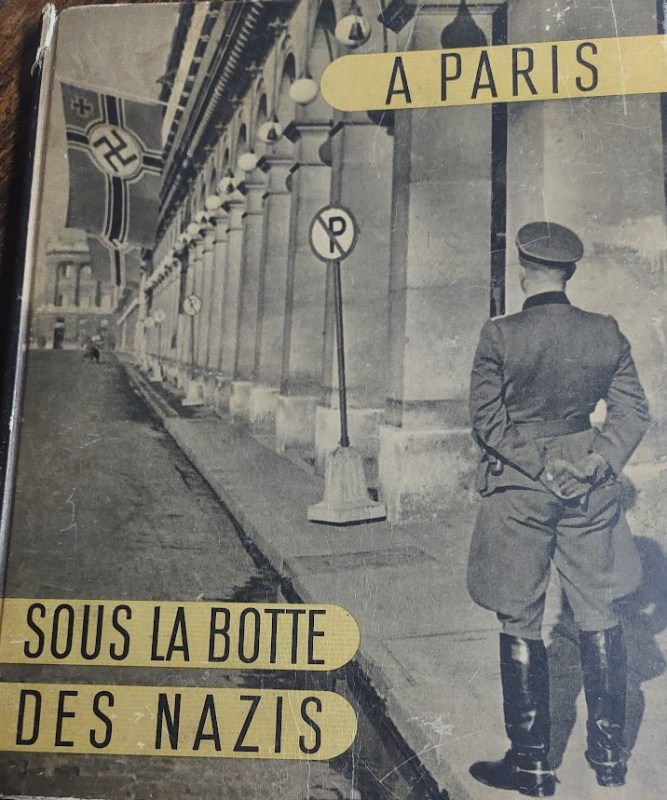
Pondering À Paris Sous la Botte des Nazis (1944)

The mailperson stuffed the book into my tiny mailbox with the same thrust they used for catalogs and flyers. It was so tightly embedded that I had to ask my husband to yank it out.
How could they know what lay inside the flimsy paper envelope, a French customs sticker affixed to one side? Obviously, they had no idea I’d ordered an original copy of a relatively rare book, printed in 1944 after the Germans fled Paris. Just a few months before, this book would have led the photographers, the editors, and the printers to prison or worse, perhaps even tied to thick, worn wooden stakes, bloodied from beatings and bullets to the heart, facing a firing squad?

It’s one thing to read the various diaries and memoirs of contemporaries, to scroll through the newspaper reports, but it’s another to see what all those words tried to convey.
À Paris Sous la Botte des Nazis begins with the vivid memories of French people of the moment they learned of the fall of France, of the Germans marching down their Champs-Élysées, the rock-crushing sound of jackboots ringing in their ears, as tears fell and fists clenched.
Hundreds of photos of all sizes fill the pages of this book, most taken by Roger Schall, brother of the publisher, Raymond Schall.
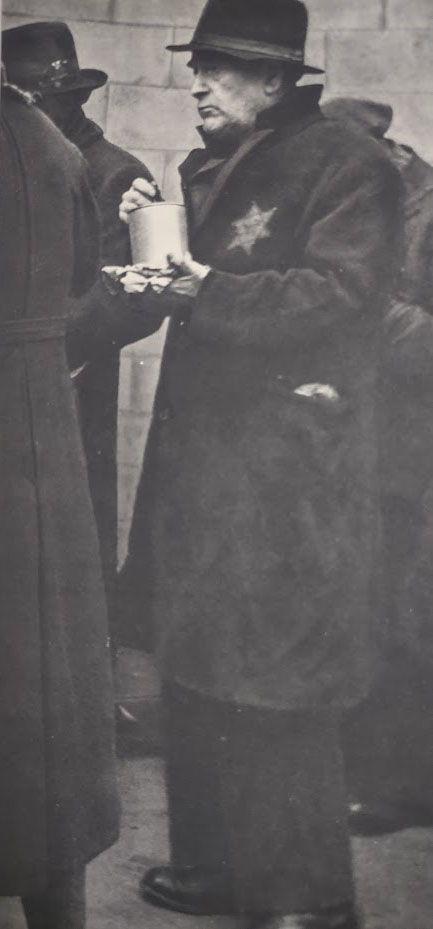
A Jewish man wearing the mandatory yellow star, clutching a cup of soup.
There’s a photo of Drancy, too, where French Jews and other political prisoners waited for transports to the east. A stark, empty place. You can see nameless people standing, looking out through the windows of the unfinished building.
On one trip to Paris, I chose to take the RER from the Charles De Gaulle airport to the metro at Saint-Michel. The train went through Drancy, still a forbidding-looking place with cement buildings of many floors. Now, of course, the buildings have windows and doors and other basic necessities of daily life. At the time, however, nothing kept the cold winter winds out. Many people passed away even before transport. Some considered them the lucky ones …
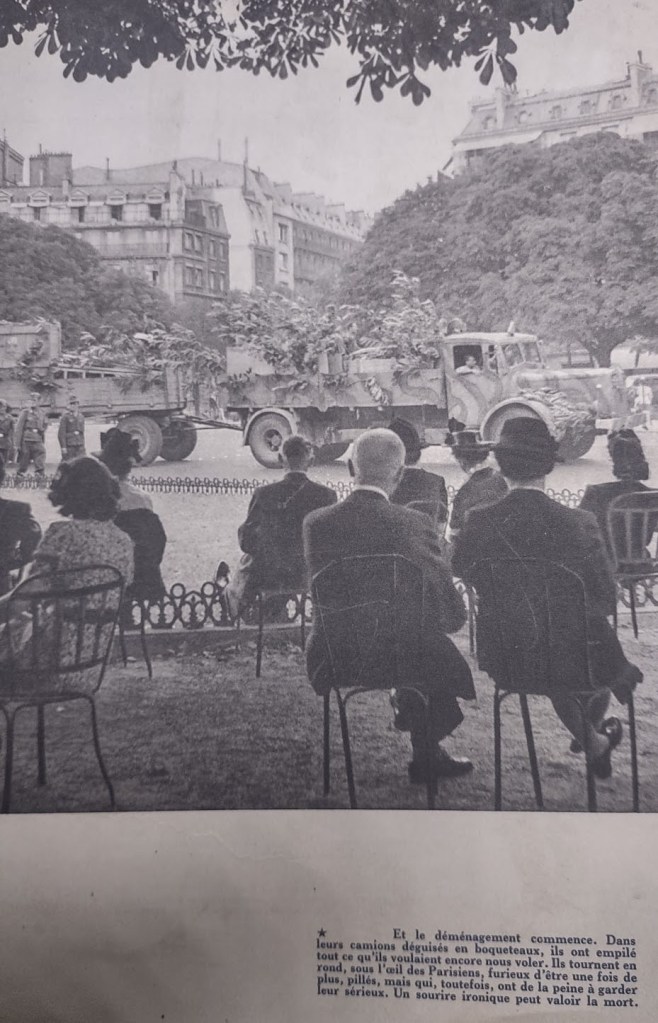
Parisians watching the Germans fleeing the advance of the Allies, August 1944.

Before and after the Occupation
For more about the literature of liberation, see this article on the Fine Press Book Association page.
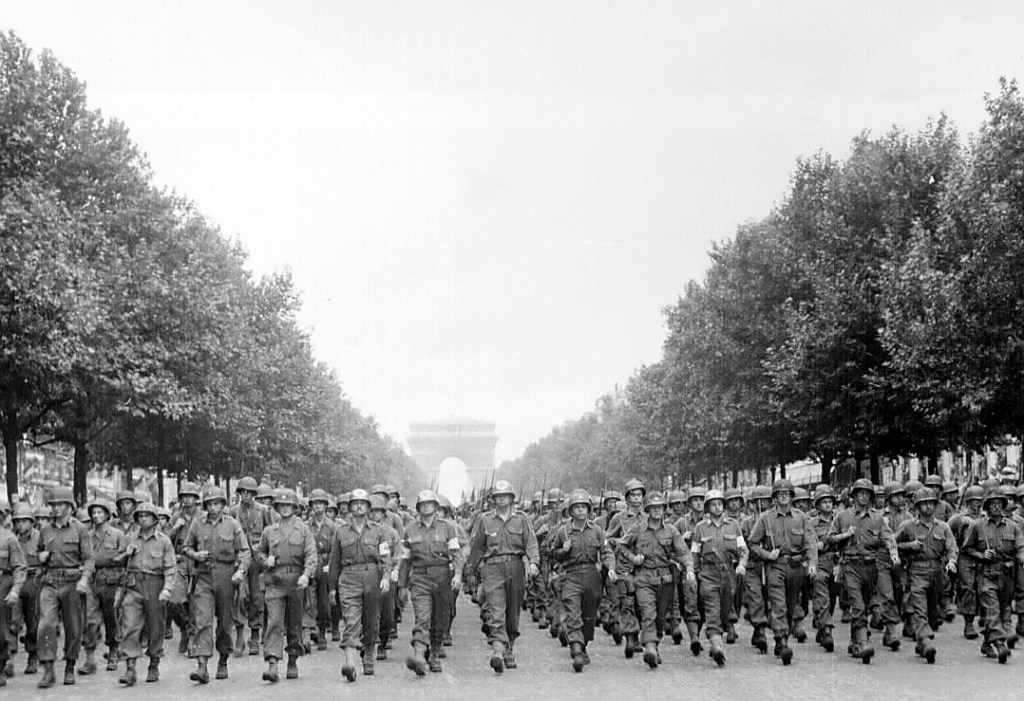
American troops of the 28th Infantry Division march down the Avenue des Champs-Élysées, Paris, in the `Victory’ Parade.
 CYNTHIA D. BERTELSEN
Thank you for your comment. I have had some family issues, a death in the family, so have not been to check on the blog. Yes, there’s a lot of tension still in France about the war, collaboration, etc. I have enugh material for several books, to be honest! Thank you again!
Cynthia Thank you for the pictures and comment about the rare French book last week. I always stay in the. 5th..my ‘neighborhood’ in Paris when I visit. This area had many hidden people and lots of resisters during World War 2 apparently as I learned after a couple of stays. Sylvia Beach lived upstairs in an apartment 1 block over from the Saint Paul Hotel; I had such a hard time trying to find it because the memorial plaque was high up. Across for the Polidor Restaurant there was a cell of writers printing pamphlets against the Nazis in a quiet home behind metal gates that are still there. All were betrayed and almost all shot I believe. There is still, in my opinion, some anger and a sense of betrayal between the French about what happened in the way of rejection and cooperation with the Nazis. I look forward to your book about this period. Dianne. I have almost finished slogging through Post War by Tony Judt, Penguin Books, 2005.