In victory, you deserve Champagne; in defeat, you need it.
~ Napoleon Bonaparte, French military leader
Champagne! The beverage of love. And of sorrow, too.
I remember my first glass of champagne. In Paris, of course, at a small restaurant on the Left Bank, far from the hubbub of Place Saint Michel. And my first whole bottle? A gift from my husband after one of his innumerable trips to francophone Africa, with stops in Paris and quick dips into the Duty-Free shop. Taittinger, founded in 1734. I don’t recall if it was vintage or not.
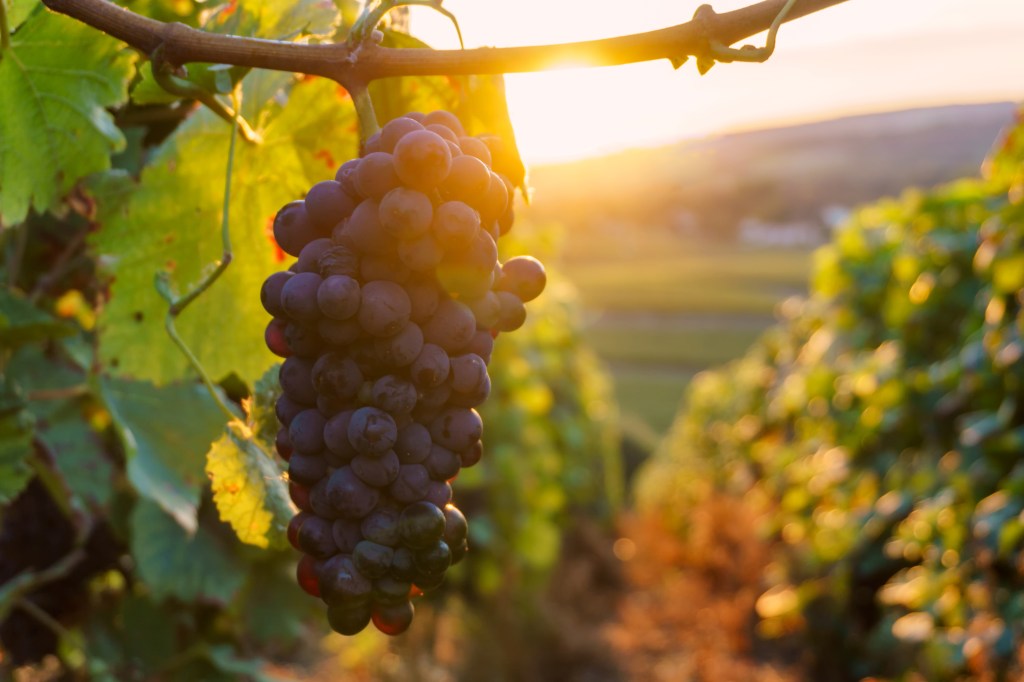
The origins of this romantic elixir began, of course, when humans fermented grapes. The finished product deviated from wonderful to nasty. But who cared? As long as the desired effect of momentary transcendence occurred!
Contrary to common belief, Dom Perignon wasn’t the first French monk to create sparkling wine. An unnamed monk from the Abbey of St. Hillaire created Blanquette de Limoux in 1531.
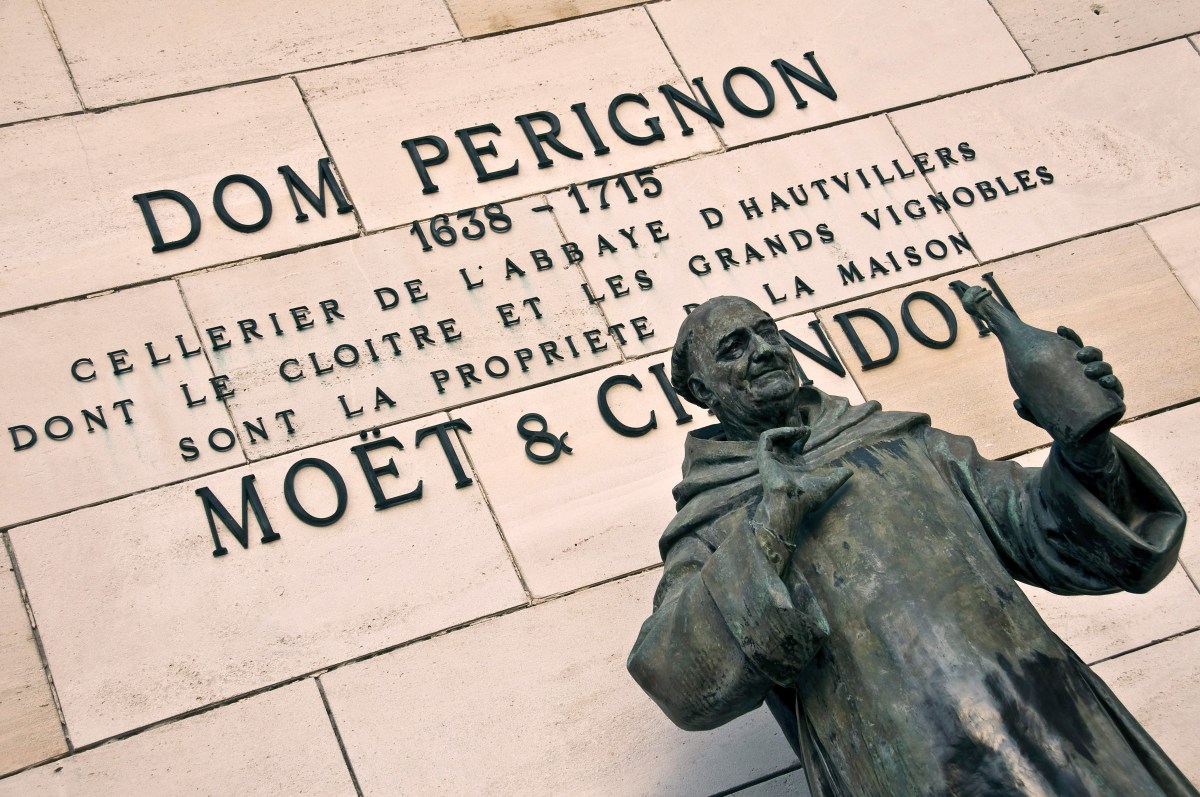
Dom Perignon (1638–1715), a Benedictine monk from a monastery in Hautvillers, acted as a cellar master for his fellow monks. This position led him to experiment with various methods, until he landed on a way to keep the bubbles intact inside the bottles, stopped with cork and not wood.
He apparently exclaimed, “Come Quickly! I am tasting the Stars!” when he finally created his vision in 1668.

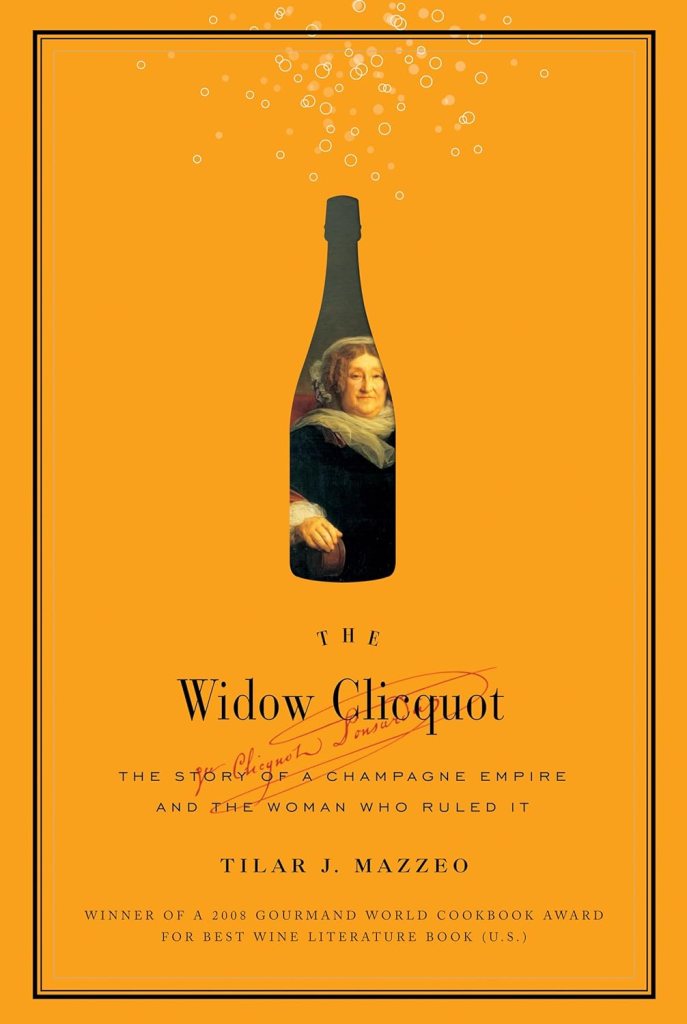
Another well-known champagne personage, the veuve (widow) Clicquot, Barbe-Nicole Clicquot Ponsardin ( 1777 – 1866), lost her husband when she was only twenty-seven. Despite her husband’s death – whether by suicide or by the more reputable cause being typhoid – Madame Ponsardin carried on with his wine business, aided by his family’s wealth as well as her own. “Riddling” became her chief contribution to the making of champagne, a practice whereby the bottles were turned upside down, yeast adhering to the cork. The process led to a clear wine, not cloudy as in the past.
Highly sought after, the real thing represents a certain allure. Champagne’s reputation as a wine for the wealthy and the powerful threatened the industry during World War II. Officers and soldiers headquartered in Paris wanted champagne. And lots of it. Especially at the brothels set up for the use of German officers, the famous One Two Two being one of them. Owned by “Fabienne” and Marcelle Jamet, located at 122, rue de Provence, the brothel operated in a mansion once owned by Joachim Murat, Napoleon Bonaparte’s brother-in-law.
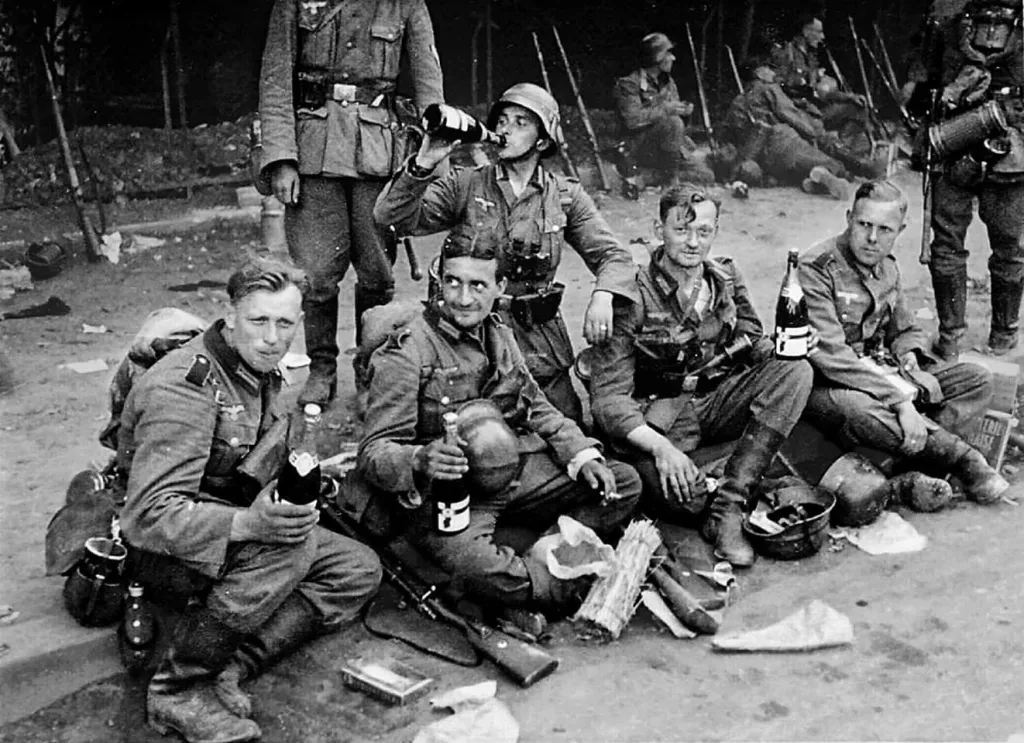
The Germans not only consumed champagne in France, they also demanded immense numbers of bottles be shipped to Germany each month.
Adolf Hilter alone amassed 500,000 bottles of vintage champagne, some held at his Kehlsteinhaus (Eagle’s Nest) in Berchtesgaden. Ironically, Hitler did not drink alcohol.
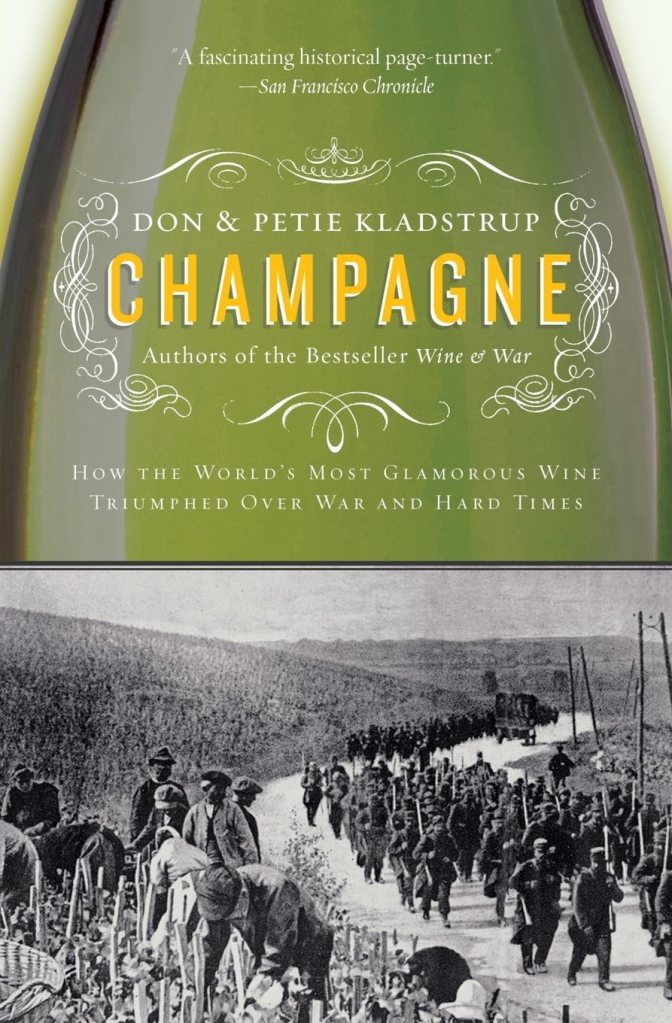
The Kladstrups’ book provides a general history of champagne. They delve into champagne’s fate during World War II, as well as in previous wars.
According to Kenneth Mouré in Marché Noir: The Economy of Survival in Second World War France, the German exploitation of champagne was phenomenal.
France produced 30 million bottles per year in the 1930s. In the four year from mid-1940 to mid-1944, the Germans took 86.3 million bottles … French producers organized the Comité interprofessional des vins de Champagne (CIVC) to negotiate official proces and coordinate the provision of essential materials, including sugar.
The producers reaped huge profits. However, Otto Klaebisch, a German officer, oversaw production as Weinführer and kept an eye on them all. On orders from the Reich, he demanded 400,000 bottles a week. Count Robert-Jean de Vogüé and others attempted to sell inferior products to the Germans. Sometimes, they didn’t get away with it, as when François Taittinger found himself in jail for defying the Nazis. Luckily, Taittinger’s brother arranged for his release.
But despite the appearance of collaboration, many vintners were anything but. Tunnels underneath the vineyards allowed many vintners to hide their best bottles behind false walls. Not only that, some often hid downed pilots and other people wanted by the Nazis. For example, the Nazis doubted the sincerity of Count Robert-Jean de Vogüé of Moët & Chandon, who worked for the Resistance. The Nazis ended up sending him to the Ziegenhain Concentration Camp in Germany. (The Count survived, just barely, but at one point, to do so, he cut off part of a gangrenous finger in order to survive. He used a piece of glass.)
The Black Market also trafficked in champagne, making millions of francs for those lucky enough to have the right connections and not get caught.
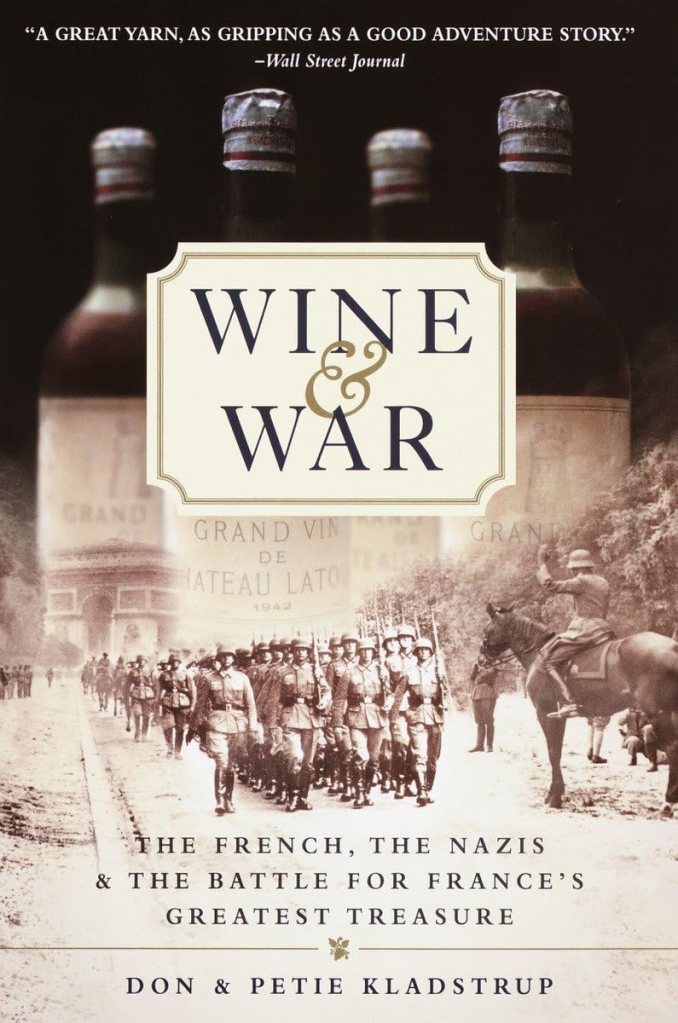
The Kladstrups wrote Wine & War, with a more pointed focus on the effect of Nazi Germany on France’s wine industry during World War II.
At dawn the next day, Friday, Aug. 25—the Feast Day, appropriately enough, of France’s Patron Saint, Saint Louis — the men of the two divisions poured into Paris. They were greeted by what was probably the most delirious outburst of emotion that has ever welcomed a liberating army. From every side, they were pelted with flowers, food, wine and champagne. (New York Times, August 23, 1964)
At Paris’s liberation, the American writer Ernest Hemingway rolled up to the Paris Ritz, where champagne flowed freely, on August 25, 1944. A little late to the big party, Papa nonetheless declared the Ritz liberated. And proceeded to enjoy the taste of victory!
 CYNTHIA D. BERTELSEN
Thank you, Kay. Yes, history is full of fabulous stories. And we’ll never know them all. Which is probably a good thing …
Thanks, Wendy. Sorry to be so late in replying. It was a fun piece to write.
Pretty good, isn’t it? The saying. AND the wine. Thank you for commenting.
I love Dom Perignon’s phrase – “I am tasting the stars”
Amazing details! Thank you for this
Always so interesting to read! Love how the tidbits of history are woven into the story!!
Always so interesting!! Love the tidbits of history entangled in the story.