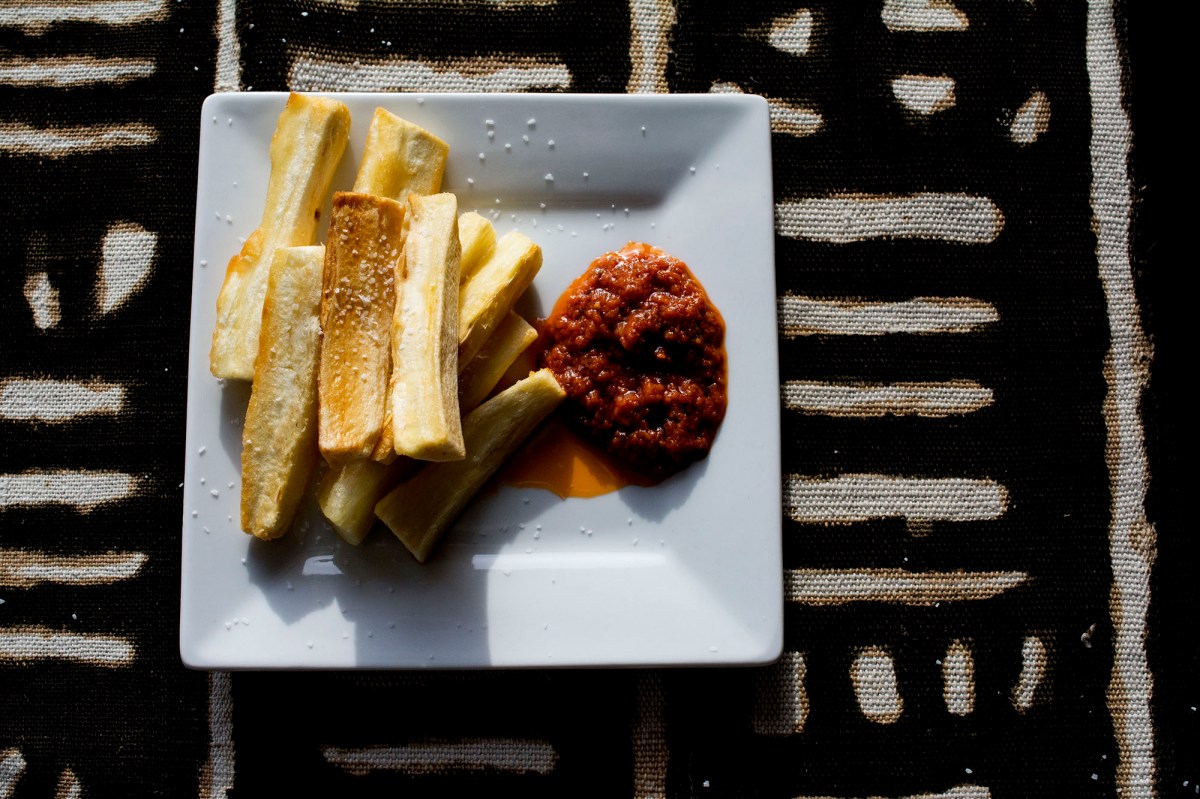
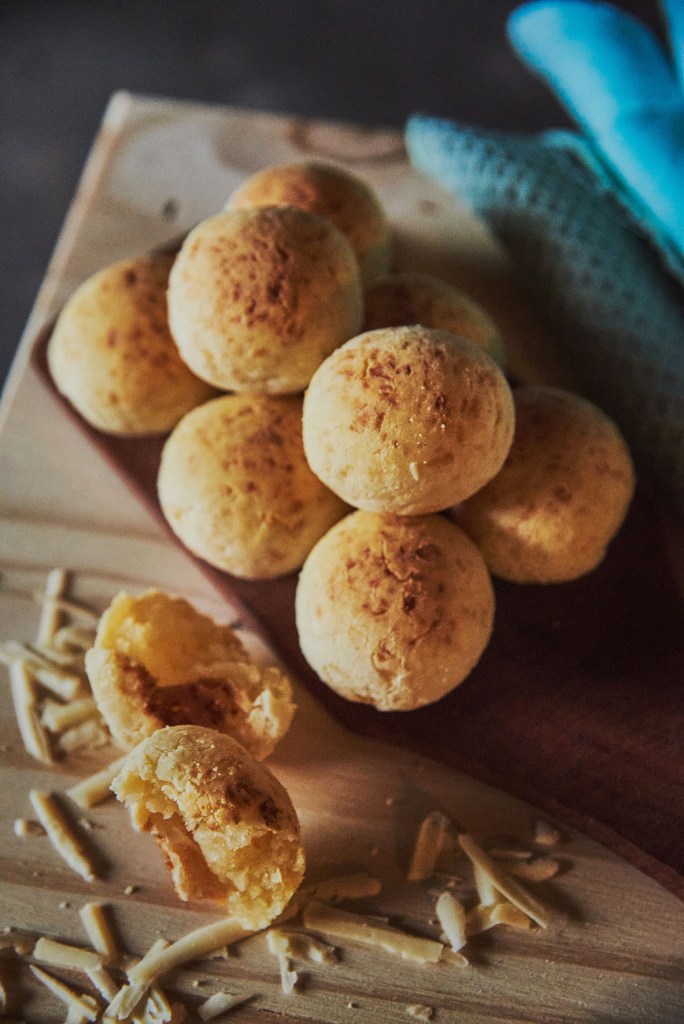
Cassava originated in Brazil and the tropical areas of the Americas.
~ Hector Rodríguez
“Chipa, chipa!”
The small Paraguayan girl, all of maybe eight years-old, thrust an enormous flat basket draped with a smudged white cloth against the open window of the bus.
I smelled the warm cassava bread even before she flicked off the cloth with a flourish, much as a magician reveals the white rabbit cowering under his top hat. I pointed to the bread closest to me, and she held out her hand. Payment first, then food. I plunked one guaraní (about ten U.S. cents at that time) into her other hand, and she passed the bread to me, after twisting it into a small paper napkin.
At that moment, the driver snorted, “Jaha! Let’s go,” and the bus slowly rambled down the rutted road, tiny tornadoes of red dust billowing behind us. I tore open the chipa as I settled back onto the wooden bench. I bit into the chewy, cheesy center first, the best part, just like I used to scrape out the frosting of an Oreo before eating the chocolate cookie part. It’s best eaten warm, or even hot.
Cassava, the starchy tuberous root of a perennial tropical plant, didn’t excite me much at first.
Stringy, bland, pale. Those words describe it well.
Cassava (Manihot esculenta)―known by myriad names but called mandioca or mandió in Paraguay―originated in central Brazil and/or Paraguay and spread around the world. It provides energy, thanks to carbohydrates. In many regions of the world, that’s not such a bad thing, because the carbohydrate calories from the mandioca ensure that other vital nutrients, such as protein, will not be diverted from calories necessary for tissue maintenance. Cassava might be either bitter or sweet. Both varieties contain varying levels of cyanogenic glucosides, the toxicity of which can be reduced with proper processing and culinary treatment.
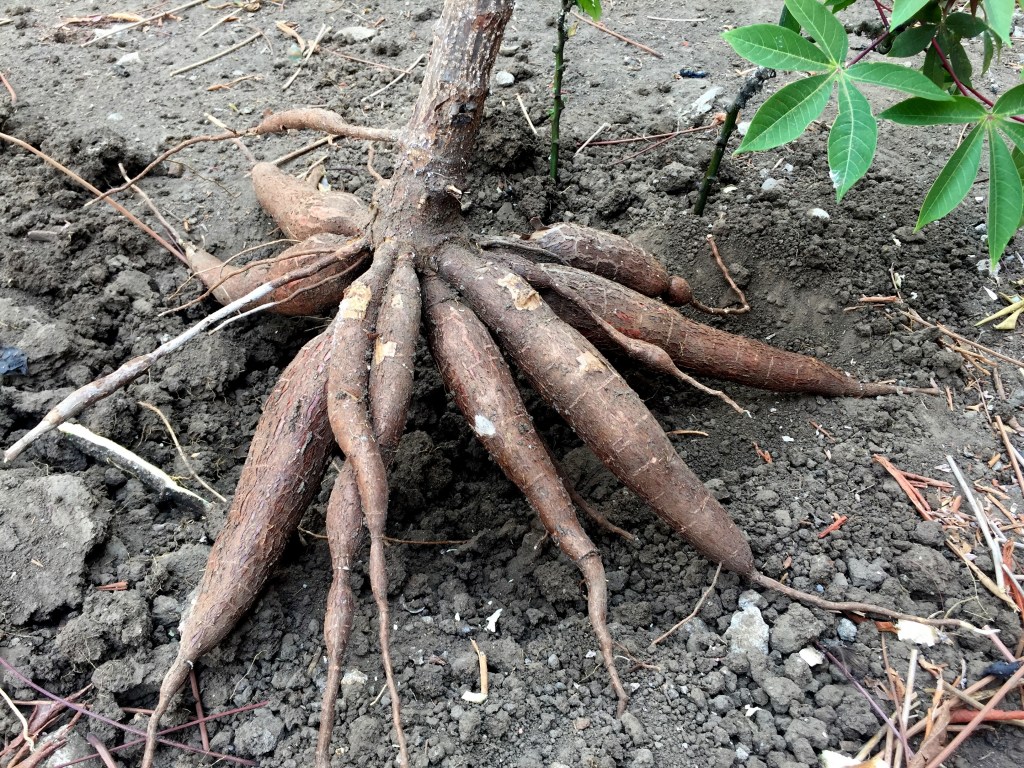
Peeled, cut into six-inch chunks, and boiled in salted water until tender enough so that a knife slips in easily, mandioca can still be quite fibrous. The tough stringy core must be removed. Generally, this is easy, because as the chunks of mandioca cook, they split apart. Then the eater or cook can easily remove the core by hand.
After long days spent in Peace Corps training out in the Paraguayan countryside, I found my first bites of mandioca rather tasteless. The mild flavor, with little difference in degree of blandness from the white potato, requires some sort of embellishment. That, I soon learned, came in a bottle plopped down on nearly every table. Pickled hot peppers, swimming in vinegar, livened things up considerably. And a big slab of grilled beef―lomito―didn’t hurt either, provided that meat appeared in the local market at all.
The greatest pleasure of all with mandioca occurred when Doña Olga at my pensión fried it after boiling it. Hêe, “yes” in Guaraní. A crisp outer layer hid the tender insides, adding texture and mouthfeel.
Later, in the States―unless I bought it in a market geared strictly to people from Latin America or the Caribbean or Africa―mandioca tended to be old, with black lines running through the whiteness. I constantly poked and prodded any mandioca for sale, hoping to find roots bearing wounds inflicted by some savvy shopper, who had broken off a tip of the waxed roots to peer into the whiteness, seeking those telltale black lines.
Years after leaving Paraguay, I still craved mandioca. With each bite, I remembered that little girl rubbing the red dust out of her eyes as she waited for the next bus to pull up along the side of the road, selling chipa to another traveler. I wondered what happened to her, like I often pondered Doña Olga’s fate, a miracle worker in the kitchen, given local food shortages and lack of access to markets other than the village’s.
I marveled at the power of food to forge connections, to rouse long-buried memories years after the fact.
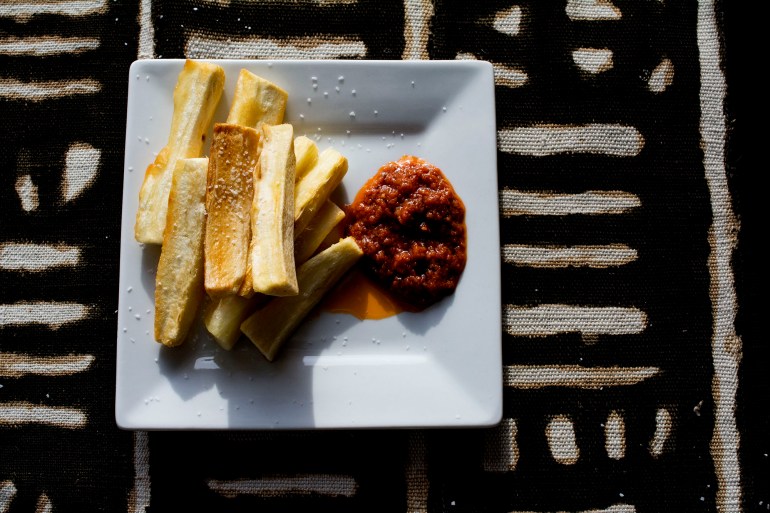
Fried Yuca/Cassava/Manioc
Serves 6
2 pounds yuca, peeled, cut into 4-inch sections, boiled until tender
4 cups (1 quart) vegetable oil for frying
Coarse sea salt, to taste
Drain cassava. Heat oil in a heavy pot, Fry Daddy, or other fryer. Fry cassava pieces in batches until they begin to turn golden. Drain on paper towels. Serve with a favorite hot sauce.
 CYNTHIA D. BERTELSEN
Oooh, I love yuca with garlic sauce! We have a Puerto Rican/Colombian restaurant here th