A Trip Down Memory Lane, and a New Cookbook to Savor
As with any country, food habits change from region to region. Germany is no different in that regard. Most of the so-called German food familiar to Americans originated in southern Germany, particularly Bavaria. The Nazi movement first gained a foothold in Munich, in Bavaria. World War II then ensued, bringing devastating destruction and suffering because of one man’s insecurities and fears. However, he couldn’t have done it on his own without the support of millions of cultish followers …
Fortunately, the chaos righted itself after many horrors, and Germany could once again take its place honorably among the countries of the world, both in politics and in the kitchen.
Speaking of the German kitchen, there’s more to German cooking than the Bavarian rendition.
I only know this because someone reminded me. Since I have only been to Germany twice, I really am unfamiliar with the broad sweep of cooking in Germany. Like most Americans, I thought of Bavarian cooking when I thought of German food.
The food of Bavaria, then, was no stranger to me. I’d eaten such food in Paraguay when I served there as a Peace Corps volunteer. The strudel and beer in the many restaurants were owned by Germans, and those places left me with profound memories. The owners fled Germany after World War II, many of whom adhered to the Nazi mentality. They likely came from Bavaria. I remember the maître d’ at one restaurant: he clicked his heels when people arrived. The only thing missing was the Nazi salute. Later, I enjoyed many meals at Milwaukee’s fabulous Mader’s, a restaurant reminiscent of a castle looming high over the Rhine, complete with mannequins dressed in chain mail and armor.
My first sojourn on German soil occurred during a road trip to Denmark to meet several Danish relatives in Idom. We’d stopped in a small German town not far from Münster, searching for the perfect German experience, you know, with the dirndl and lederhosen, with Oktoberfest overtones. That sort of thing.
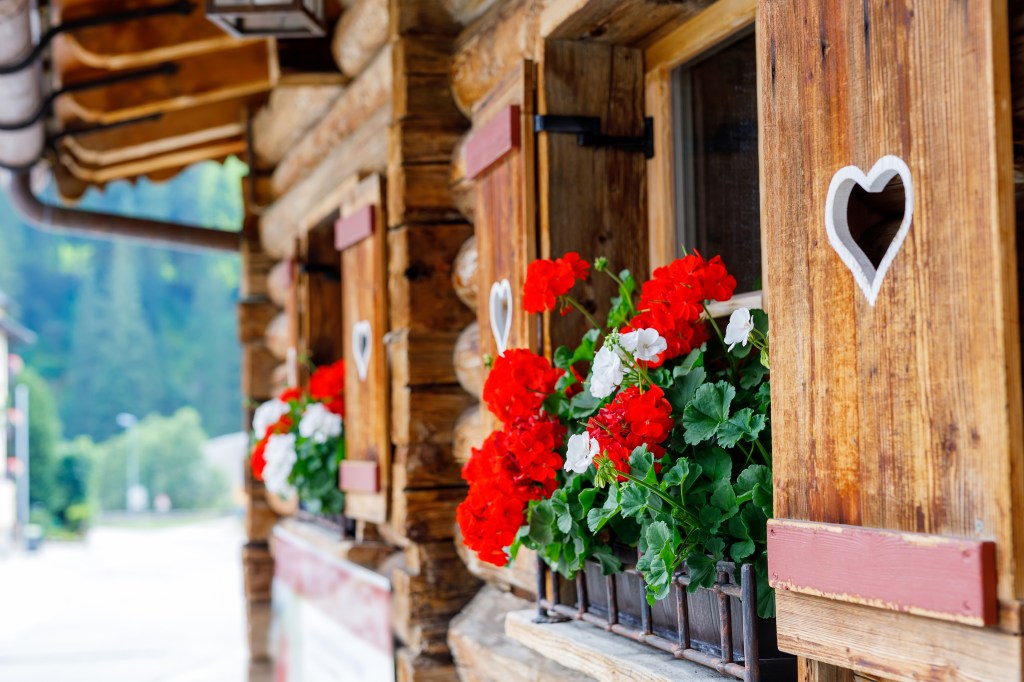
At first glance, it couldn’t have been more perfect. Rustic, small, local, family-owned, with rooms to rent upstairs, complete with feather-stuffed duvets! Gleaming planks of pine covered the walls, and aromas emanating from the dining room promised culinary nirvana.
Unfortunately, there was a fly in the ointment, as they say. And probably there really had been a fly, doing its dirty thing, puking on and then gobbling a bite of French brie at a truck stop at the French border the day before. My husband ate most of the creamy, soft cheese when we stopped to eat lunch at a scenic, wooded road near the border crossing between France and Germany.
To cut to the chase, food poisoning smacked him hard. And so he spent most of the night as one does with food poisoning.
The idyllic place took on a darker hue, but our son and I were hungry. Down the creaky stairs we went, to the dining room. Since ja and nein were just about the only German words I knew, ordering dinner didn’t go 100% smoothly, but when the platter-sized plates arrived, we gobbled down the schnitzel, mashed potatoes, and carrots with no problem.
The language barrier arose again as I tried to order soup for my poor husband.
I asked in English, French, and Spanish. She kept shaking her head. Nein. Just as I was about to give up, a man stood up from his corner table, walked over, and asked me what it was I wanted. I explained. He rattled off a translation. The waitress almost ran to the kitchen. Moments later, she returned with a big bowl of broth and some bread. I thanked them both and hurried upstairs with the soup
Thank goodness for Good Samaritans!
Years later, along with some friends from bygone days (old friends, in other words), I also spent several days in Munich. We took a sad and somber side trip to Dachau, which is only 19 miles to the northwest of the city … imagine how that was for the inmates of that camp.

We gorged on pork knuckles in the square near the famous Glockenspiel, and enjoyed schnitzel with spaetzle in a biergarten while gazing at the English Garden.
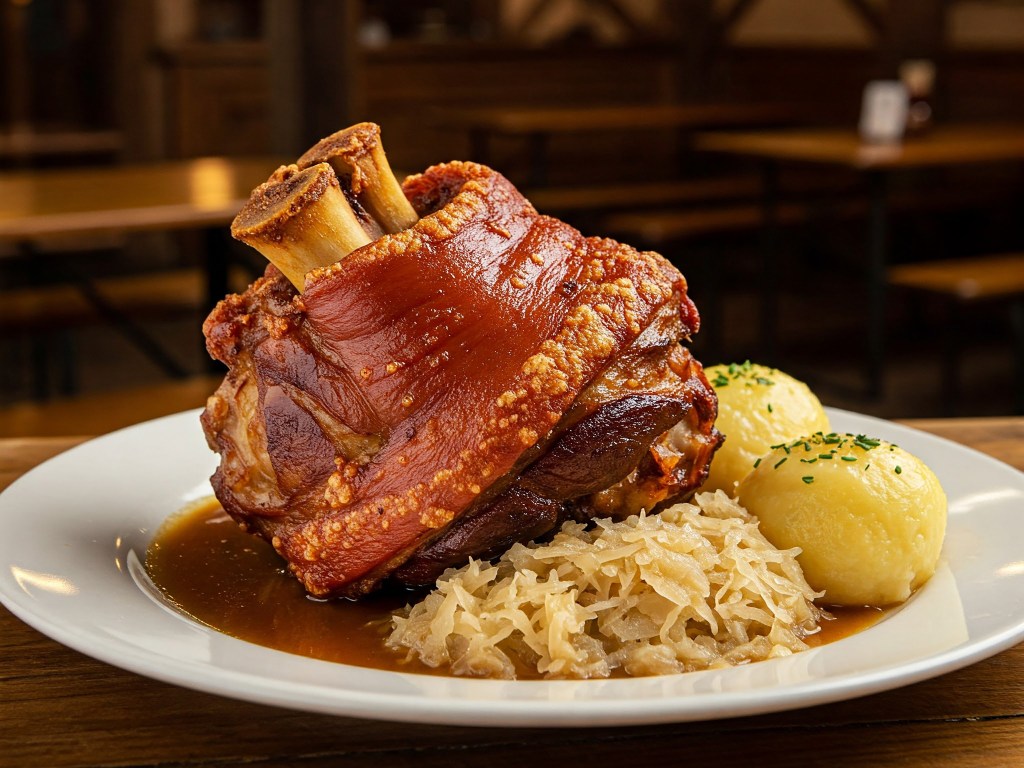
A few weeks ago, in Palm Coast, Florida, we discovered a German restaurant serving various renditions of schnitzel, bratwurst, and other traditional German delicacies, including dishes based on these two popular meat options. The meal didn’t live up to my memories of the food I remembered eating elsewhere. However, the experience goaded me to research German cookbooks, since I no longer owned Mimi Sheraton’s highly recommended The German Cookbook (576 pages).
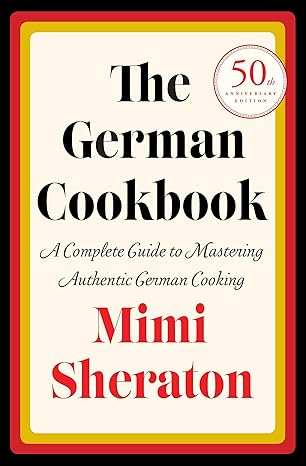
Ms. Sheraton’s book doesn’t contain any photographs, as it was first published in 1965, when people did not seem to need photographs alongside their recipes.
I turned instead to Phaidon’s The German Cookbook, a doorstopper of a book by Alfons Schuhbeck (448 pages). Yes, there are photographs, but not of every recipe. The art on the cover comes from a painting by Caspar David Friedrich, a well-known landscape artist of his day (1774-1840). The various chapter-dividing pages also feature his artwork.
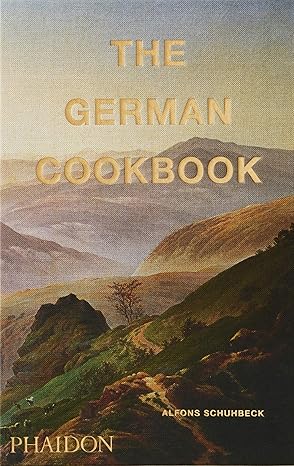
Schuhbeck, a Michelin-starred chef,** includes the regional origin of each recipe, which is a nice touch. He also includes eight recipes for schnitzel out of the nearly 500 in the book, but I veered toward my favorite: plain pork schnitzel.
At the restaurant in Palm Coast, which sparked my current German food obsession, the chef served three sauces, or gravies, with the schnitzel. Mushroom, Pepper, and Brown. The Pepper Sauce was the best. Imagine my delight in finding this recipe in Schuhbeck’s book!
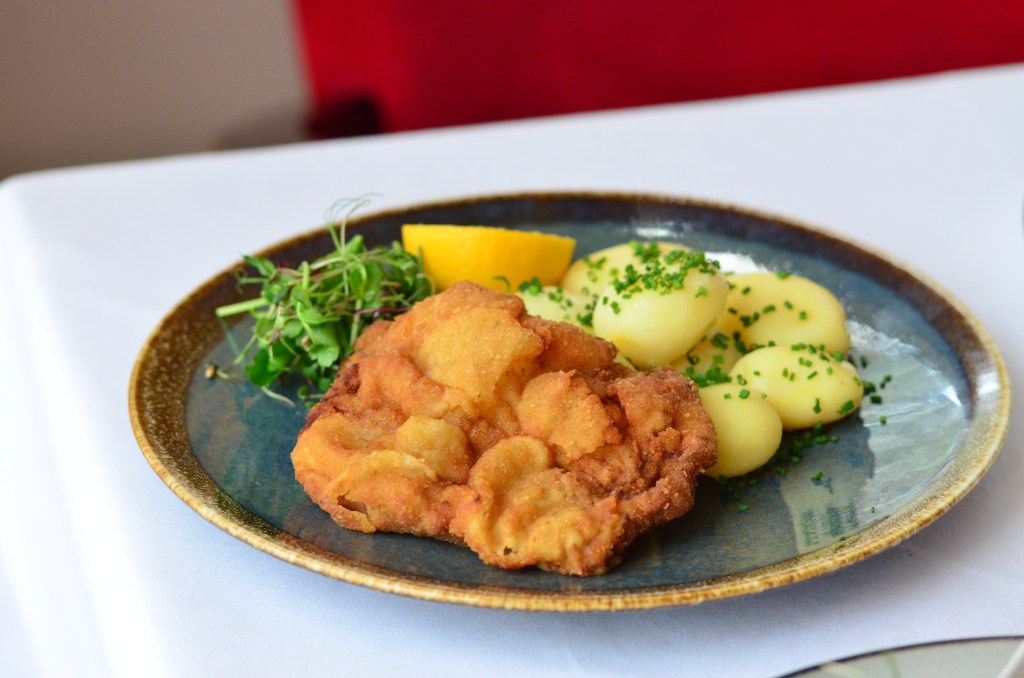
Schuhbeck’s Pepper Sauce (he just calls it Tomato Sauce)*
1 red bell pepper (seeded and chopped into small dice)
1 green bell pepper (seeded and chopped into small dice)
1 white onion (I used a small one, diced like the peppers)
1 – 2 tablespoons oil
1 1/4 cups tomato purée (paste)
1/2 cup ketchup
1/2 cup chicken stock
1 teaspoon sweet paprika
1 teaspoon hot paprika
Salt and freshly grund pepper to taste
Heat oil in a heavy skillet and sauté peppers briefly until slightly soft and flabby, then add onion. Cook until peppers and onion turn golden in color. Add tomato paste, ketchup, and stock. Braise peppers for about 15 to 20 minutes, or until the sauce thickens. Stir in both paprikas and season with salt and pepper.
What’s your favorite German dish? Favorite cookbook? Favorite city?
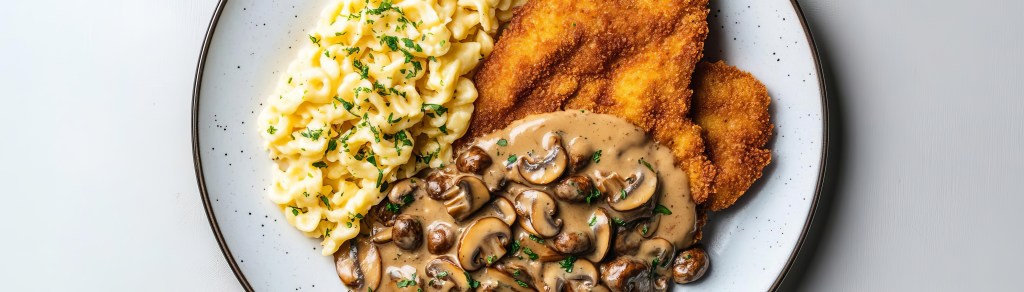
*Originally called Zigeunersoße, or Gypsy Sauce, now considered to be a derogatory term. Hungarian Sauce is another way it’s described. Some recipes call for lemon juice or vinegar. I think the chef at the restaurant in Palm Coast added a bit of Brown Sauce instead of chicken stock and no tomato paste.
**Schuhbeck was sentenced to prison in 2022 for tax evasion. His sentence has been suspended as he has an incurable form of cancer being treated outside prison, according to his lawyers. He is not the first cookbook author to face prison. Hannah Glasse did, as well as Martha Stewart, among others.
 CYNTHIA D. BERTELSEN
It is generally served with rain… which works well with heavy food.
Yes, cooler weather! Send some to me when it arrives up your way, please.
Now I’m craving sauerbraten with potato dumpling, red cabbage, and perhaps some Dortmunder, or maybe just a paltter of wursts… ’though I don’t think I could face anything that heavy until the cooler weather arrives.
>