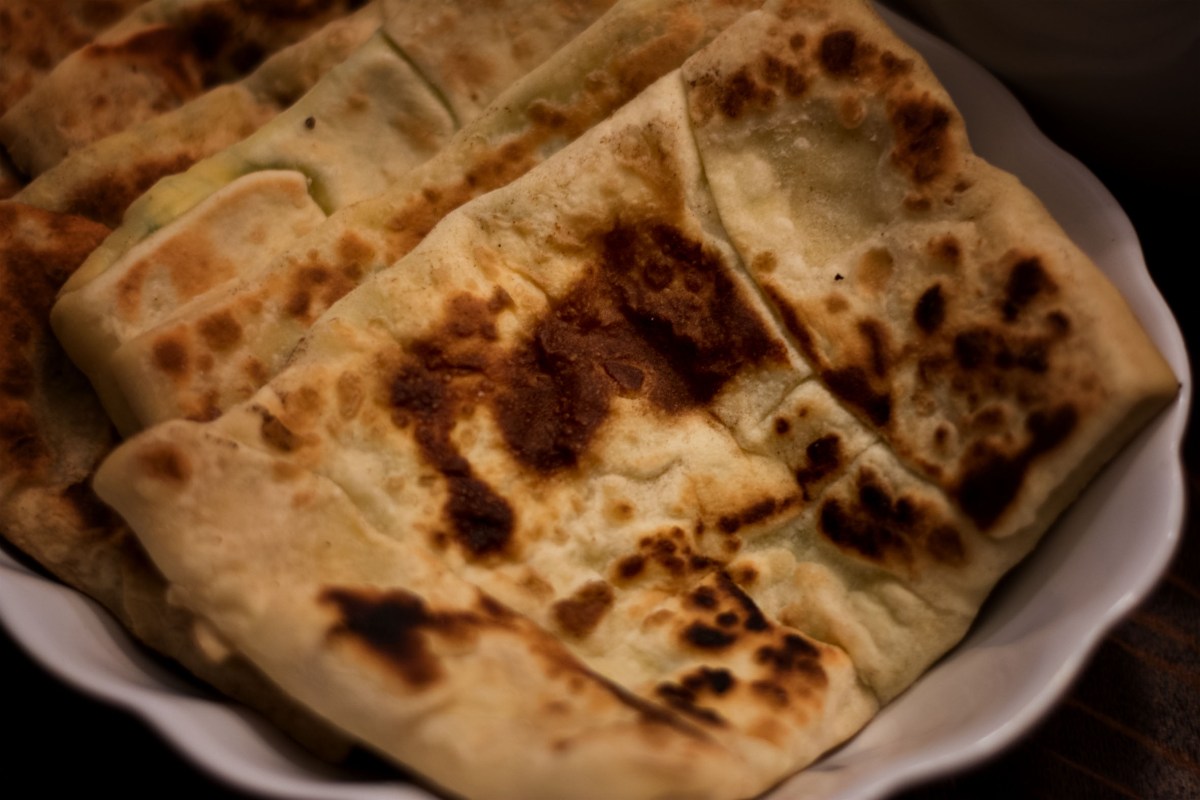
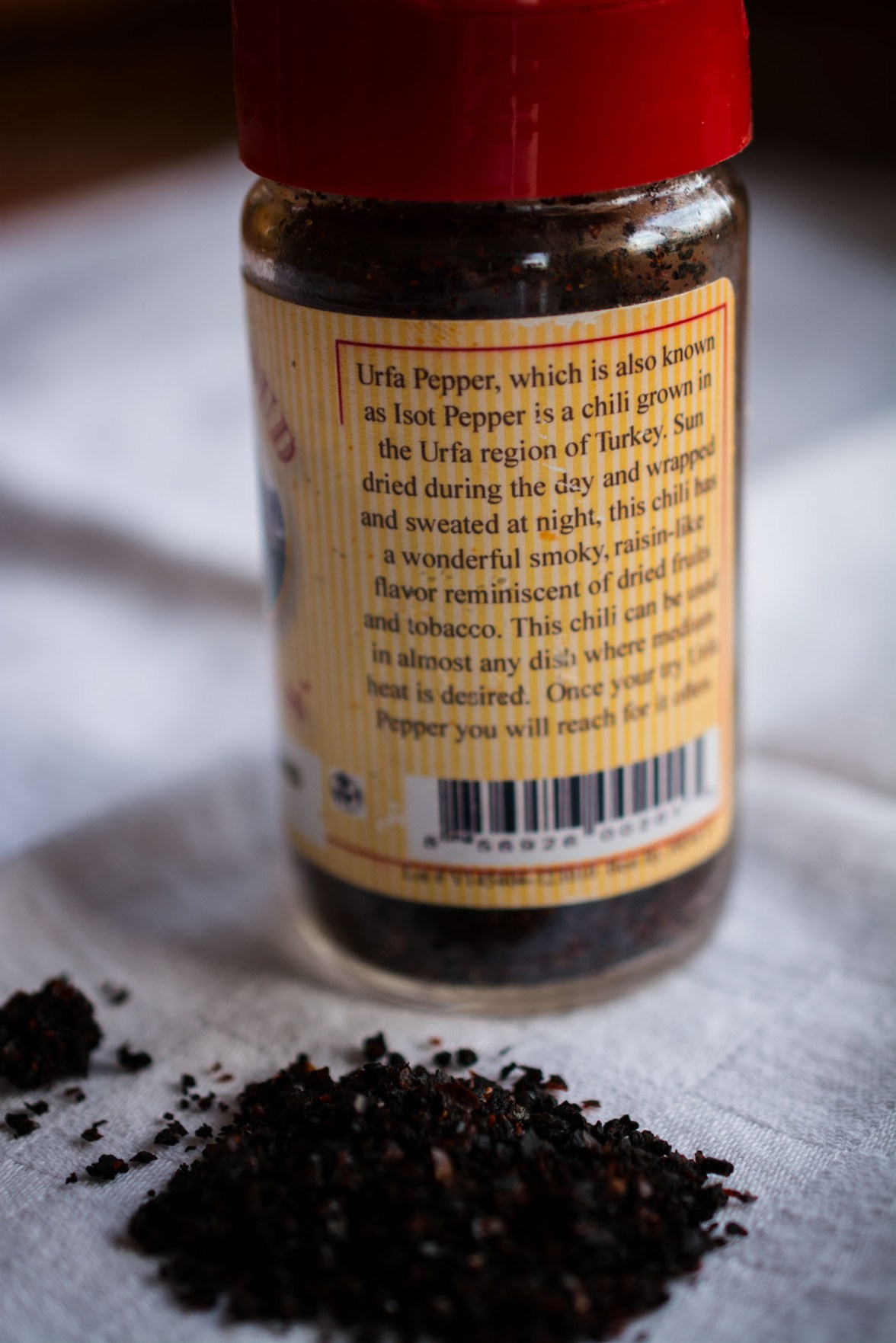
Turkish bread – Katmer – blistered like flatbreads usually do and the feta/dill filling bubbled as the heat reached through the thin buttery dough. In the oven, the cinnamon-laced meatballs cooked slowly in a tomato sauce, enlivened by chopped green peppers and pinches of Marash and Urfa pepper flakes. The fragrance of bread and meat soon brought the rest of the family into the kitchen, hovering like a pack of hungry wolves waiting for the kill.
For someone like me, raised with the abomination of margarine, the aroma of butter sizzling on a griddle smelled like what I think Paradise ought to. As I flipped the cooked breads onto a clean kitchen towel, cooling them slightly as I finished the rest of the breads, I glanced at the cookbook I’d followed to make these breads: Özcan Ozan’s The Sultan’s Kitchen: A Turkish Cookbook (Periplus, 1998). Ozan cooks in the United States now, but his roots reach all the way back to Turkey. Signs of migrations appear in his recipes: cinnamon from Asia, pilavs and rosewater from Persia, breads and kebabs from central Asia.
And with that glance of mine, I thought about why cookbooks continue to be one of the biggest sellers, and have been ever since the first days of the printing press. Not only do these books tell stories and teach cooking and prescribe right actions, they offer us their readers, we their users, a glimpse of other worlds and other people. For me, cookbooks often evoke daydreams involving travel, meals by the sea, or nights perfumed by wine and flowers and chirping insects, non-biting of course! Cookbooks can transport us – as much as we might wish to be detached and unemotional, eating organic, eating fresh, eating raw like beasts – on a virtual magic carpet to a different level of consciousness. By allowing us to experience, albeit maybe not as “authentically” as we might yearn for, in the cooking of Others, cookbooks open us to new possibilities and understandings and aspirations. And emotions.
This statement from Abdülhak Sinasi (Çamlicadaki Eniştemiz, 1944) says it better than I can:
One should not pass over these things, simply saying they are food. They are in reality a complete civilization.
And Turkey possesses a vast heritage of cookery books, many influenced by the opulent palaces of the Ottoman Empire, many still unavailable to non-Turkish speakers. (See BİBLİYOGRAFYA.)
Originally written by a faculty member of the School of Forensic Medicine and published in 1844 as Melce’üt Tabbâh’in, the first Turkish cookery book published in English was Turkish Cookery Book, by Turabi Efendi, published in 1864, without crediting the source of the material. Charles Perry wrote in the Los Angeles Times in 1990 that ” ‘Nevin Halici’s Turkish Cookbook,’ recently printed in England, is the first book by a Turkish cookery writer ever translated into English,” which is apparently not the case.
Cookbooks, with all their supposed faults and inadequacies, invite us to ponder civilizations and the formation of human connections. Barbara Haber, in “Growing Up with Gourmet,” in her book From Hard Tack to Home Fries (Free Press, 2002), describes a college class that visited the Schlesinger Library. Many of the young people found cookbooks that spoke to them through their ethnic background, be it “Irish, Italian, African-American, Jewish,” but one young “plain vanilla Midwesterner” seemed at a loss. Haber pointed her in the direction of community cookbooks from the girl’s home state of Iowa. “She too had found her place and her people in a cookbook.” (p. 220 – 221)
Even though I’ve never to been to many parts of the world, and probably will never do so, I frequently hop on the “magic carpet” hidden in the pages of a cookbook and enjoy the enchanting flavors of foods that might come from cooks living in centuries past. And give thanks that someone somewhere took the time to share their recipes and their experiences with people far away in both time and space.
Resources on Turkish Cuisine:
Articles on Turkish Cuisine from the Turkish Cultural Foundation
BİBLİYOGRAFYA (A Bibliography of Turkish Cookbooks)
Historical Sources on Turkish Cuisine
Yemek ve Kültür Dergisi (Food and Culture), a journal about food, in Turkish (but Google Translate does a pretty good job of rendering the text into English)
 CYNTHIA D. BERTELSEN
Kitty, they’re easier to make than m’sammen, believe me!
Hi Cynthia! The flat breads look exactly like Moroccan m’sammen. Different filling. YUM!
I had never heard of these pepper flakes.! Thanks.