Gherkins & Tomatoes

Gherkins & Tomatoes

Meditations and Photographs about Food, Cooking, and Life

Main menu

Skip to content
  • 365 Days – Photo-a-Day Gallery
  • About Gherkins & Tomatoes
  • Culinary History Resources
  • RECIPE INDEX

Archives

Show Grid Show List

Post navigation

Franciscans habits

Begging the Question: Les Quatre Mendiants and Provence’s Thirteen Christmas Desserts

December 7, 2010 by Cynthia Bertelsen

The truth is, the dishes associated with Provence’s Thirteen Desserts abound with religious symbolism. Take the Four Beggars, or Les Quatre Mendiants, which symbolize something that we in the secular West have basically lost, a sense of awe and fear about the natural world and all that is in it. The Thirteen Desserts likely represented a way to ensure a righteous, blessed life, free from the challenges of living in times of strife and great uncertainty.  Although today we might […]

Categories: Christmas, Cooking, France, French Cooking, Monasteries, Nuts • Tags: Christmas, Cuisine Francaise, France, French Cooking, Monasteries, Monks, Provence, Quatre Mendiants, Thirteen Desserts, Treize Desserts

4
Copyright and photo credit:

Weihenstephan, the Oldest Brewery in the World (?)

August 26, 2009 by Cynthia Bertelsen

Make that the oldest brewery still standing (and producing) in the world, never mind that the oldest brewery is actually a smashed clay pot [no pun intended] someplace yet to be dug up by an intrepid and curious archaeologist. Given my deep interest in fermentation, as well as the impact of monks and monasteries on the foods and beverages of Europe,  plus the fact that I just adore European beer, imagine my delight yesterday when I looked at all the […]

Categories: Europe, Fermentation, Food News, Germany, Monasteries • Tags: Bavaria, Beer, Breweries, Monasteries, Monks, Weihenstephan

3
Monastic Gardens 18

The Random Herbalist: The Church as Farmer

August 4, 2009 by Cynthia Bertelsen

The Catholic Church influenced many things, even (especially?) agriculture, as this passage from History of the English Landed Interest: Its Customs, Laws, and Agriculture, by Russell Montague Garnier (1908) 2nd. ed, vol. 1, implies. The monastery libraries also held much treasure, opening up the monks to the wonders of old knowledge and enabling them to forgo reinventing the wheel, so to speak: The agriculture of the neighbouring Church lands would be closely watched and imitated by the lay farmers. Advice […]

Categories: Agriculture, Herbs, Middle Ages, Monasteries • Tags: Agriculture, Farming, Herbs, Middle Ages, Monasteries, Monastic Gardens, Monks

Sisymbrium Officinale

The Random Herbalist: Charlemagne, St. Gall, and the History of Medicine

August 3, 2009 by Cynthia Bertelsen

The history of medicine, a fascinating subject, shows how people began to understand more and more about the corporeal body. Herbs played a big role in the evolution of this understanding, and medieval monasteries encapsulated this knowledge: The curriculum of these cathedral schools embraced originally the Trivium, (arithmetic, grammar, music), and the Quadrivium (dialectics, rhetoric, geometry, astronomy). Charlemagne, in the Capitulary of Thionvillc (805), ordained, however, that medicine also should be taught (as already stated) under the name of Physic. […]

Categories: Gardens, Herbs, Middle Ages, Monasteries • Tags: Charlemagne, Gardens, Herbs, Monasteries, Monks, St. Gall

1
Monastic Gardens 12

Idylls of Cuisine #24

August 2, 2009 by Cynthia Bertelsen

[A photograph, and nothing more, for silent contemplation.]

Categories: Gardens, Monasteries, Photography • Tags: Gardens, Monasteries, Monastic Gardens, Monks

Library Door, St. Gall (Photo credit: Steven Wagner)

The Random Herbalist: Libraries and Monastic Gardens

August 1, 2009 by Cynthia Bertelsen

Another reason why the Internet is so fantastic — here is a catalog of the manuscripts available in the monastery at St. Gall in Switzerland. (You need to be able to read German, or at least have a good dictionary at hand!) In 1875, the Catholic Administration (Katholische Konfessionsteil) of the Canton of St. Gall commissioned Gustav Scherrer (1816-1892), a scholar and professor from St. Gall, to draw up the first printed catalogue of the manuscripts kept at the Abbey […]

Categories: Libraries, Monasteries • Tags: Libraries, manuscripts, Monasteries, Monks

Photo credit: Bart Busschots

The Random Herbalist: Monks and Plant Migration

July 31, 2009 by Cynthia Bertelsen

Along with dill, which we’ve briefly brushed by, other plants also traveled with the monks as they made their way across Europe: To the monks, who in their way were great gardeners, we are indebted for the introduction of several plants ; and since in many cases the ancient monastery has disappeared, the flowers which were wont to grow in its garden are often taken for wild ones. Among others, the Snowdrop was a favourite flower in a monastic garden, […]

Categories: Gardens, Herbs, Middle Ages, Monasteries • Tags: Gardens, Herbs, Monasteries, Monks, Snowdrop

Monastic Gardens 14

The Random Herbalist: The Roman Influence on Monastic Gardens

July 30, 2009 by Cynthia Bertelsen

With this post, I celebrate a year of writing “Gherkins & Tomatoes!” Thank you so much to everyone who visits the blog. I look forward to the coming year! The Romans wielded profound influence on the architecture and organization of monasteries … and, hence, on us … centuries later. According to Viollet-le-Duc : —* ” It is probable that the first cloisters were porticoes of the same kind as those of antiquity, that is to say;— origin, a sloping roof […]

Categories: Gardens, Herbs, Monasteries • Tags: Eugène Emmanuel Viollet-le-Duc, Gardens, Herbs, Monasteries, Monks, Roman Empire, Romans

3
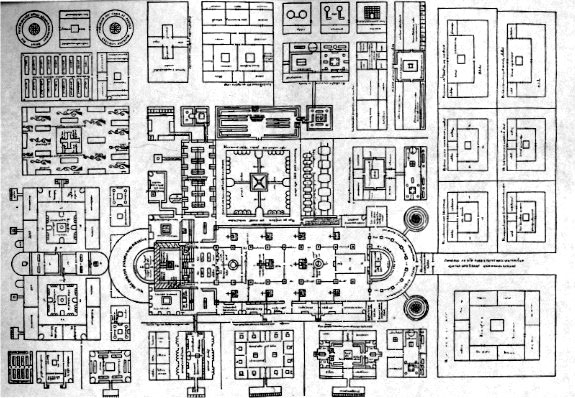
Figure 24, St. Gall Plan

The Random Herbalist: St. Gall, A Model Garden Plan?

July 29, 2009 by Cynthia Bertelsen

[NOTE: I'd like to thank the readers of Gherkins & Tomatoes for their patience this summer --- in the last few weeks I've moved from a house where I've lived for fourteen years, my favorite cat died, and I've been writing under deadline for an article for an encyclopedia as well as for a local magazine.  And now I'm currently attending a family reunion. I promise to be more fully "present" to the blog and all reader comments soon.  Meaning […]

Categories: Gardens, Herbs, Monasteries • Tags: Gardens, Herbs, Monasteries, Monastic Gardens, Monks

4
Monastic Gardens 8

The Random Herbalist: The Hortus Eremitje

July 28, 2009 by Cynthia Bertelsen

Charlemagne had a shovel in every monastic garden, or so it seems:* As early as the days of Charles the Great (Charlemagne) the cloister owned outside property, and just as at Canterbury we must conclude that the plan of St. Gall meant the orchards and vineyards to be outside. The whole time of Charles the Great— and the St. Gall plan may be supposed to belong to it — was of great importance for horticulture. Charles himself encouraged personally the […]

Categories: Gardens, Herbs, Monasteries • Tags: Capitulare de Villis, Charlemagne, Gardens, Herbs, History of Garden Art, Marie-Luise Gothein, Medieval Gardens, Monasteries, Monastic Gardens, Monks, Purslane

5
Monastic Gardens 3

The Random Herbalist: Books About Monastic and Medieval Gardens

July 27, 2009 by Cynthia Bertelsen

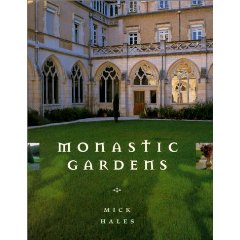
I find the following books enlightening, soothing, and motivating. My plan is to create/design a medieval/monastic herb garden over the upcoming winter and plant it starting next spring.* Monastic Gardens, by Mick Hales (2000) Private worlds glimpsed by a privileged few, monasteries have long maintained an aura of mystery. Outsiders imagine the silent seclusion, the austere settings, the rigorous routines of a religious life. But these sacred places share a common bond with the secular realm. Monks and nuns, too, […]

Categories: Bibliographies, Gardens, Herbs, Monasteries • Tags: Bibliographies, Brother Cadfael, Chicken, Fennel, Gardens, Herbs, Hildegard of Bingen, Medieval Gardens, Monasteries, Monastic Gardens, Monks

5
Photo credit: John Menard

The Random Herbalist: An Introduction to Early Monastic Gardens

July 23, 2009 by Cynthia Bertelsen

A series on monastery cooks (“At the Tables of the Monks“)*, and a recent comment on the impact of medieval monks on the spread of dill throughout Europe, led me to reflect in more detail on the influence of monks on early European agricultural practices. For the next several days, I will be sharing notes from my reading. Thus within the walls of the Benedictine monasteries were large gardens cultivated by the monks in common, and often smaller ones assigned […]

Categories: English Cooking, Gardens, Herbs, Monasteries • Tags: Gardens, Monasteries, Monks

2
Lavander, St. Remy, France (Photo credit: Holly hayes)

At the Tables of the Monks: The Infirmary Cook

June 1, 2009 by Cynthia Bertelsen

THE COOK FOR THE INFIRMARY (p. 204-205) [Note: The Abbey paid the infirmary cook for his services, since this person did not belong to the cloistered community.] For the infirmary, and especially for the use of those who had been subjected to the periodical blood-letting, there was a special cook skilled in the preparation of strengthening broths and soups. He was the chief or meat-cook of the establishment, and had under him two boys, one as a general helper, the […]

Categories: English Cooking, Middle Ages • Tags: Cooking, Cooks, England, Food, Middle Ages, Monasteries, Monks

1
Photo credit: Howard Stanbury

At the Tables of the Monks: The Fish-Cooks

May 31, 2009 by Cynthia Bertelsen

THE FISH-COOKS (p. 206) [Note: The Abbey paid the fish-cooks  for their services, since these people did not belong to the cloistered community.] In the large monasteries, such as, for example, Edmundsbury, there were two cooks for the fish-dishes ; the first was properly called the “fish-cook,” the other was “pittance-cook.” Their appointment was made for life, and by letterspatent signed by the abbot in Chapter, with the prior and the community as witnesses. Though called the “fish-cooks” these servants […]

Categories: English Cooking, Fish • Tags: Cooks, England, Fish, Middle Ages, Monasteries, Monks

View from the Guesthouse (Photo credit: Christ Phillips)

At the Tables of the Monks: The Guest-Hall Cook

May 30, 2009 by Cynthia Bertelsen

THE GUEST-HALL COOK (p. 206) [Note: The Abbey paid the gust-hall cook  for his services, since this person did not belong to the cloistered community.] The cook to attend to the needs of visitors was appointed by the cellarer, and had under him a boy to help in any way he might direct. His office was frequently for life, and certainly, once appointed, he could be removed only with difficulty. He had to get everything ready for the entertainment of […]

Categories: English Cooking • Tags: Cooking, Cooks, Middle Ages, Monasteries, Monks

Glastobury Kitchen Window

At the Tables of the Monks: The Abbot’s Cook

May 29, 2009 by Cynthia Bertelsen

THE ABBOT’S COOK (p. 202-203) [Note: The Abbey paid the abbot's cook  for his services, since this person did not belong to the cloistered community.] This official held more the position of a steward, or valet to the superior, than that of a cook. He had to go each morning to the abbot or prior for orders, and to find out what would be required for the superior’s table for the day, and he had then to proceed to the […]

Categories: English Cooking • Tags: Cooking, Cooks, England, Monasteries, Monks

Photo credit: Brianna Privett

At the Tables of the Monks: The Caterer (or Buyer)

May 28, 2009 by Cynthia Bertelsen

THE CATERER, OR BUYER, FOR THE COMMUNITY (p. 202-203) [Note the Abbey paid the caterer for his services, since this person did not belong to the cloistered community.] The caterer, says one Custumal, “ought to be a broadminded and strong-minded man : one who acts with decision, and is wise, just and upright in things belonging to his office ; one who is prudent, knowing, discreet and careful when purchasing meat and fish in the market or from the salesman.” […]

Categories: English Cooking • Tags: Cooks, England, Middle Ages, Monasteries, Monks

Monks cellarer's domain

At the Tables of the Monks: The Kitchener

May 27, 2009 by Cynthia Bertelsen

THE KITCHENER (p. 80-81) The office of kitchener was one of great responsibility. He was appointed in Chapter by the abbot with the advice of the prior, and he should be one who was agreeable to the community. According to the Custumal of one great English abbey, the kitchener was to be almost a paragon of virtue. He ought to be “a truly religious man, just, upright, gentle, patient, and trustworthy. He should be ready to accept suggestions, humble in […]

Categories: English Cooking • Tags: Cooks, Kitchener, Middle Ages, Monasteries, Monks

5
Refectory (Photo: James Long)

At the Tables of the Monks: The Refectorian

May 26, 2009 by Cynthia Bertelsen

THE REFECTORIAN (p. 76-77) The refectorian had charge of the refectory, or as it is sometimes called, the frater, and had to see that all things were in order for the meals of the brethren. He should be “strong in bodily health,” says one Custumal, “unbending in his determination to have order and method, a true religious, respected by all, determined to prevent anything tending to disorder, and loving all brethren without favour.” If duties of this office required it, […]

Categories: English Cooking, Middle Ages • Tags: Cooks, Middle Ages, Monasteries, Monks, Refectory

Adam the Cellarer, St. Alban's

At the Tables of the Monks: The Cellarer

May 25, 2009 by Cynthia Bertelsen

Until June 2, because of a time-consuming project, “Gherkins & Tomatoes’ ” posts will cover the key players in medieval monastic kitchens.* We begin with The Cellarer. THE CELLARER (p. 71-73): The cellarer was the monastic purveyor of all foodstuffs for the community. His chief duty, perhaps, was to look ahead and to see that the stores were not running low ; that the corn had come in from the granges, and flour from the mill, and that is was […]

Categories: English Cooking • Tags: Cellarer, Cooks, England, Monasteries, Monks

Monks Beaulieu Abbey floor plan

Monastery Kitchens

May 23, 2009 by Cynthia Bertelsen

Abbatia quae vocitatur Bellus Locus Monasteries in the Middle Ages tended to follow similar layouts. Beaulieu Abbey, a Cistercian abbey in Hampshire, England, now in ruins, once supported a large number of people. It started out with 120 cows and 20 bulls, all very conducive to cheese-making. Beaulieu Abbey’s floor plan shows a tiny kitchen some distance away from the “frater” or dining area (go HERE to see a large picture):

Categories: Archaeology, English Cooking, Middle Ages • Tags: Beaulieu Abbey, Cooking, Kitchens, Middle Ages, Monasteries, Monks

2
Making White Cheese During the Middle Ages (From Tacuinum Sanitatis (ÖNB Codex Vindobonensis, series nova 2644), c. 1370-1400)

At the Table of the Monks: Cheese, Of Course (Part V)

May 22, 2009 by Cynthia Bertelsen

Smelling like something dead, washed-rind cheeses* with their soft non-acidic centers offered a taste of animal protein to medieval monks prohibited from eating meat for over 100 days in the average liturgical year. The fact that these cloistered souls liked the results of their odiferous labor ought to cause us to wonder something: what did their meat taste like when they ate that? But we’re thinking of cheese, not the perfectly wrapped and labeled cheese available today from various Trappist […]

Categories: Cheese, Middle Ages • Tags: Cheese, Cheese-making, Cistercians, Middle Agess, Monasteries, Monks, Paul Kinstedt, Washed-rind Cheese

2
In the Refectory

At the Tables of the Monks: Charlemagne Loved Cheese (Part IV)

May 21, 2009 by Cynthia Bertelsen

A possibly apocryphal story, told  in many places — print and Internet — reads something like this: After a long day of traveling, the emperor Charlemagne stopped at a bishop’s residence to rest, conveniently at dinnertime. In a ninth-century biography of Charlemagne, written by an erudite monk at St. Gall monastery in Switzerland, the author says, Now on that day, being the sixth day of the week [Friday], he was not willing to eat the flesh of beast or bird.  […]

Categories: Cheese, France • Tags: Belleaye, Benedictines, Beval, Brie, Briquebec, Chaligny, Chambarand, Champaneac, Charlemagne, Cheese, Cheesemaking, Citeax, Cluny, Conques, Gorgonzola, Igny, Laval, Maroilles, Monks, Mont-Des-Cats, Munster, Parmigiano-Reggiano, Port Salut, Saint-Maur, Saint-Nectaire, Tamie, Tête de Moine, Wash-rind Cheese

6
Monks concert in the egg

At the Tables of the Monks: Part I

May 18, 2009 by Cynthia Bertelsen

The hood does not make a monk. William Shakespeare, Measure for Measure Contemplating a National Geographic article from February 2009 on the mummies of priests and other religious persons in Sicily, it’s easy to start wondering just how and what monks ate. Citing research on the skeletal material indicated that unlike most of the population of Europe in the early modern era, the article suggested that monks and other clerics tended to weigh in on the portly side. Furthermore, close […]

Categories: France, French Cooking, Italian Cooking, Italy • Tags: Benedictines, Hieronymous Bosch, Monks, St. Benedict, The Concert in the Egg

4

Post navigation

Food forms the very essence of life, from the fruit fly to the elephant, with humans in between. So much of what we do revolves around cooking, eating, and the finding of food. Here you'll discover stories, meditations, and photographs celebrating the places that we call home. And, of course, the food that garnishes it all.

My book, due out September 15, 2013

Looking for Something? SEARCH

What’s Cookin’ Here

  • The Grocery List: Color, Primates, and Food Selection
  • A Bare Table is Like an Artist’s Canvas
  • “Stew’s so comforting on a rainy day.” *
  • Singkong, Manioc, Mandioca, Mandió, Tapioca, Yuca: Singing the Praises of Manihot esculenta (Cassava)

Enter your email address to subscribe to this blog and receive notifications of new posts by email.

Join 408 other followers

On the home page, click on the pictures to go to the posts. Or click the little boxes in the upper right-hand corner to display posts and first paragraphs.

What We’re Talkin’ About Here

Africa All Souls' Day American Cooking Art Barack Obama Bibliographies Book Reviews Bread Christmas Cookbooks Cooking Cooks Cuisine Francaise Culinary History Day of the Dead Eggs England English Cooking Fish Food Food History Food Photography France French Cooking French cuisine Gardens Haiti Halloween Herbs India Italian Cooking Italy Julia Child M. F. K. Fisher Monasteries Monks Morocco Mushrooms Paris Photography Provence Recipes Southern cooking Virginia White House

Who’s visiting?

Beautiful Blogger Award

Reader Appreciation Award

Blog at WordPress.com. Theme: Customized Gridspace by Graph Paper Press.
Follow

Get every new post delivered to your Inbox.

Join 408 other followers

Powered by WordPress.com